
Why Cheese Boards Feel Expensive But Often Are Not
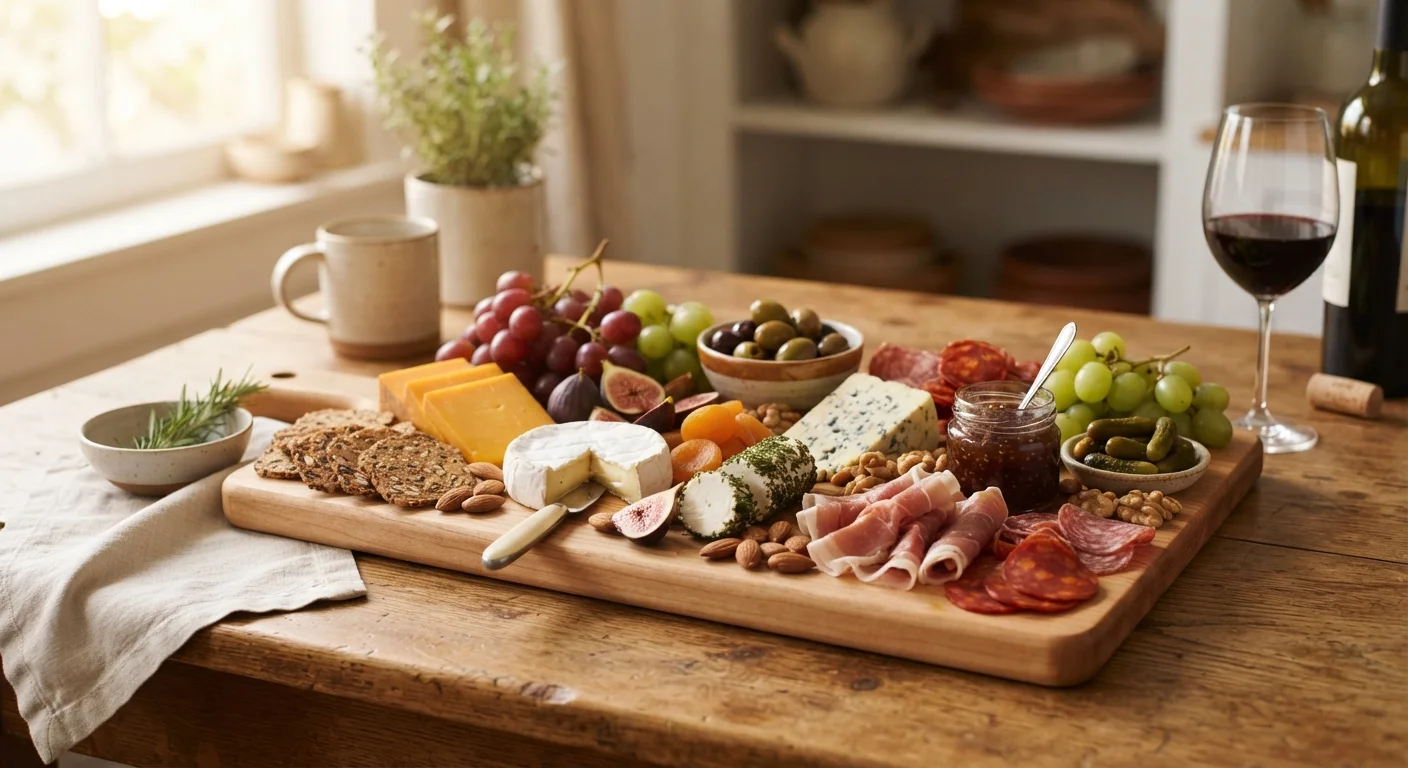
Photo credit: thetastyliving.com
In this article
The idea that a charcuterie or cheese board has to break the bank is largely a myth. Here is the reality behind building one affordably.
Key Takeaways
- Most cheese board ingredients are available at standard grocery stores for a few dollars each.
- Presentation techniques matter more than ingredient cost in making a board look impressive.
- Mixing one or two quality cheeses with affordable fillers keeps costs realistic for families.
- Crackers, seasonal fruit, and nuts from bulk bins are reliable low-cost board staples.
- Portion planning prevents over-buying, which is one of the biggest hidden costs of any spread.
Where the expensive reputation comes from
Cheese boards got their upscale image from restaurant menus and catering spreads where markups are built into every item. A restaurant charges for labor, overhead, and presentation, so a board that costs $8 in ingredients might appear on a menu for $24. Home cooks see that price and assume the ingredients themselves are costly, but the math at a grocery store looks quite different.
The habit of shopping at specialty food stores for board ingredients also inflates perceived costs. Whole Foods or a gourmet deli will charge noticeably more for the same cheddar or salami available at a standard chain supermarket. Choosing where to shop is one of the most direct ways to change the math before you even select a single ingredient.
Myth
You need specialty cheese shop varieties to make a board worth serving.
Fact
Standard grocery store cheeses work just as well for most guests and cost significantly less.
Aged cheddar, pepper jack, and fresh mozzarella are all widely available at everyday supermarkets for a fraction of what an artisan cheese counter charges. Most guests at a casual gathering cannot reliably distinguish an imported aged manchego from a domestic version at half the price. Anchoring your board with one modestly interesting cheese alongside familiar varieties satisfies the crowd without straining the budget.
Myth
Charcuterie boards require expensive cured meats like prosciutto or imported salami.
Fact
Sliced deli turkey, hard salami from the regular deli case, and pepperoni all hold their own on a board.
Prosciutto is delicious, but it is not required. Hard salami, pepperoni, and even thin-sliced deli turkey fold and fan just as attractively as pricier imports. The visual effect comes from how items are arranged, not their country of origin. If you want one premium meat for variety, buy a small amount and surround it with affordable options so the total cost stays manageable.
Myth
Building a good board takes hours of preparation.
Fact
Most boards come together in 20 minutes or less with no cooking required.
Cheese boards are one of the few appetizer formats that need no heat, no recipe, and no special equipment. Slice cheeses, open packages, wash fruit, and arrange everything on a cutting board or large plate. The approach used in professional kitchens, known as mise en place (having everything ready before assembly), applies well here. Prepping ingredients in advance also reduces waste by helping you measure out only what you need.
Myth
A cheese board is only worth it if it looks like something from a magazine.
Fact
Guests respond to variety and flavor, not to perfection of arrangement.
Social media has created an outsized impression of what a cheese board should look like. In practice, any spread with two or three cheeses, a starch, something sweet, and something savory reads as generous and thoughtful. Filling gaps with inexpensive grapes, apple slices, or mixed nuts achieves visual fullness without spending on artisan honeycomb or specialty jams. Understanding what actually drives appetizer cost down helps separate real expenses from perceived ones.
Myth
Crackers and bread are just filler and do not matter to the board.
Fact
Crackers and sliced bread are the highest-volume, lowest-cost element and do a lot of the work.
A box of plain water crackers or sliced baguette from a grocery store bakery costs very little and gives guests something to build bites on. Volume on the board comes primarily from these starches, which means you can use smaller amounts of cheese and meat without the board looking sparse. Rotating cracker types, such as seeded, plain, and a multigrain, adds visual variety at minimal extra cost.
Building a board that works for a family budget
A practical board for six people does not require six different cheeses. Two cheeses, one familiar and one slightly different in texture or flavor, give guests a genuine choice without multiplying cost. Pairing those with one affordable meat, a seasonal fruit (grapes and apples are consistently inexpensive), nuts from a bulk bin, and two types of crackers produces a spread that feels complete.
Portion size is where budgets break
Many home cooks overbuy for cheese boards because they picture a lavish restaurant spread. A practical rule for appetizer boards is about 2 ounces of cheese and 1 ounce of cured meat per person when other food is being served. Over-purchasing specialty items and leaving them unused is the most common way a board actually does become expensive. See common portion and prep mistakes for a fuller breakdown of what to watch.
Planning ahead matters as much as ingredient selection. Thinking through portion sizes and timing before shopping prevents the scenario where half a wheel of cheese goes uneaten because you misjudged how much other food guests would eat. That unused cheese, not the cheese itself, is what makes boards feel expensive in retrospect.
Stat figures for a standard grocery trip bear this out. A block of sharp cheddar, a package of sliced salami, a box of crackers, a bunch of grapes, and a small bag of mixed nuts can total well under $20 at most US supermarkets, feeding six comfortably as an appetizer. That is a workable number for most family gatherings.
Under $20
Typical grocery cost for a basic board serving 6
Based on average US supermarket prices for cheddar, sliced deli salami, crackers, grapes, and mixed nuts as of general grocery pricing data.
2 oz
Recommended cheese per person for an appetizer board
A widely cited guideline in home entertaining resources when cheese is served alongside other appetizers and a main course.
20 min
Average assembly time for a home cheese board
Estimated based on no-cook assembly of pre-sliced and packaged ingredients without cooking or baking required.

Author
Appetizers Editorial Team
Appetizers Editorial Team is the collective byline for our editorial team and contributor network. Articles published under this byline or an editorial pen name are researched, written, and reviewed according to our editorial standards for clarity, consistency, and independence before publication.
View all articles →