
Building a Week of Balanced Meals from a Short Grocery List
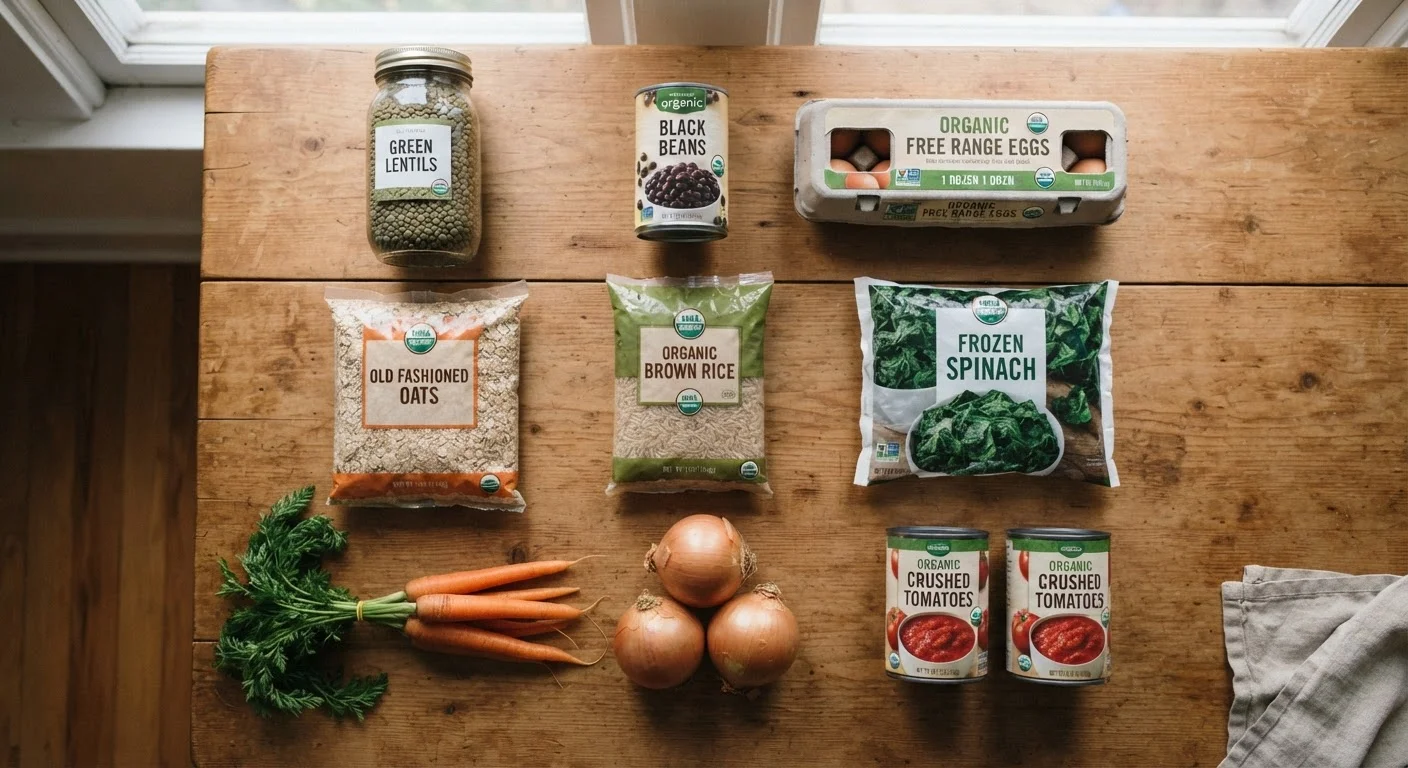
Photo credit: thetastyliving.com
In this article
A practical walkthrough of planning nutritionally varied dinners and lunches using a concise, affordable list of whole-food staples.
Key Takeaways
- A list of 10 to 12 staple ingredients can produce five to seven nutritionally varied dinners and lunches.
- Rotating cooking methods and seasonings across one protein source prevents meal fatigue without extra cost.
- Combining a grain, a legume, and a vegetable at most meals covers a broad range of essential nutrients.
- Batch-prepping one or two base ingredients on the weekend cuts weeknight prep time significantly.
- Frozen and canned vegetables match the nutritional profile of fresh produce and cost less per serving.
Why a short list works better than a long one
Most families do not run short on dinner ideas because they lack recipes. They struggle because a long, varied grocery list pushes spending up and leaves ingredients unused. A short, intentional list of whole-food staples solves both problems. When the same base ingredients appear across multiple meals in different forms, nothing goes to waste and the cost per serving drops.
The nutritional logic is equally sound. Whole grains, legumes, eggs, canned fish, and frozen or fresh vegetables together supply fiber, complete protein, complex carbohydrates, and a wide range of vitamins and minerals. No single meal needs to be perfectly balanced if the week as a whole is. That framing takes pressure off any one dinner and makes planning simpler.
For a broader framework before you write your list, see the meal planning checklist that walks through pantry audits and weekly prep decisions. If you want to build the habit from the ground up, the family meal planning framework covers the full repeatable process.
The core staple list
The list below is a starting point, not a prescription. Adjust quantities to your household size and swap proteins based on dietary needs. A registered dietitian can help you adapt it for any specific health condition.
What you will need
These ingredients form natural pairs. Brown rice and lentils together form a complete protein, meaning they supply all essential amino acids when eaten across the same day. Eggs are one of the most affordable complete proteins available in American grocery stores. Canned tomatoes function as both a sauce base and a braising liquid. Frozen spinach adds iron and folate to nearly any dish without prep work. For a deeper look at low-cost protein choices, the article on affordable protein sources covers eggs, legumes, and canned fish with supporting nutrition evidence.
Large pot or Dutch oven
Used to cook grains and legumes in bulk so they are ready for multiple meals.
Sheet pan
Roasts vegetables quickly and adds texture variety to grain bowls and side dishes.
Airtight storage containers
Keeps prepped rice, lentils, and cooked beans fresh in the refrigerator for up to four days.
Can opener
Accesses canned tomatoes, canned beans, and canned fish efficiently.
Planning five dinners from the list
The goal is to use each staple in at least two meals so nothing sits unused. The steps below show one reliable way to do that.
Choose your anchor grain and cook it in bulk
Pick one whole grain, brown rice or oats, and cook a large batch on the first day of your week. Brown rice works across savory dinners and grain bowls. Oats cover breakfasts and can thicken soups. A single large batch prepped on Sunday covers four to five uses without reheating from dry each time.
Build two distinct legume-based meals
Lentils and canned beans are nutritionally similar but behave differently in cooking. Red lentils dissolve into soups and dals. Canned chickpeas or black beans hold their shape in stews and grain bowls. Plan one meal using each so you get textural variety without buying additional proteins. Season them differently: cumin and coriander for one, smoked paprika and garlic for the other.
Assign eggs to two quick-prep meals
Eggs cover the two nights when time is shortest. A frittata with frozen spinach and diced onion takes about 20 minutes and feeds four. Fried rice made with leftover brown rice, one or two eggs per person, and any vegetable on hand is a 15-minute dinner. Both meals cost well under two dollars per serving in most US grocery stores.
Use canned tomatoes as the common sauce base
One 28-ounce can of crushed or diced tomatoes covers two separate meals. Use half as a base for a lentil or bean stew and the other half as a quick pasta sauce or braising liquid for vegetables. This avoids buying separate jarred sauces and removes a common budget leak. Canned tomatoes also supply lycopene, a carotenoid associated with general health, though the evidence on specific benefits is still developing.
Rotate frozen and fresh vegetables across every meal
Frozen spinach, frozen broccoli, and fresh carrots or onions cover the vegetable needs for the full week without spoilage risk. Add at least one vegetable to every dinner, even if it is just a handful of frozen spinach stirred into a bean stew. Varying the vegetable across meals adds micronutrient variety without expanding the grocery list. Frozen vegetables are harvested and frozen quickly, so their vitamin content is comparable to fresh produce in most documented nutritional analyses.
Once you have a plan on paper, pantry-first planning can fill gaps using what you already have before you add anything to the cart. If batch cooking interests you, the guide on batch cooking basics explains storage timelines and reheating methods in detail.
Keeping lunches simple without buying more
Lunches do not need their own grocery category. Leftover grain and bean mixtures reheat well and hold up in a packed lunch container. A fried or hard-boiled egg on top of leftover rice with a splash of soy sauce is a complete, fast meal. Canned tuna or salmon stirred into leftover tomato-based dishes adds protein variety mid-week without opening a new ingredient category.
The pantry staples that become dinner article lists additional shelf-stable combinations worth keeping in rotation. For families stretching a single protein across multiple nights, the guide on stretching ground beef across three dinners applies the same logic to ground beef if that fits your list.
Planning lunches this way also reduces the temptation to buy packaged convenience foods, which are typically the largest per-serving cost in a weekly grocery run. Browse the dinner and dessert section for additional affordable meal ideas that use similar staple combinations, and visit meal planning basics for strategies that reduce waste and spending week over week.
This article is for general informational purposes only and is not medical or dietary advice. Consult a qualified healthcare professional or registered dietitian before making significant changes to your diet, particularly if you have a health condition or specific nutritional needs.

Author
Nutrition Editorial Team
Nutrition Editorial Team is the collective byline for our editorial team and contributor network. Articles published under this byline or an editorial pen name are researched, written, and reviewed according to our editorial standards for clarity, consistency, and independence before publication.
View all articles →