
Mise en Place on a Budget: Why Prep Work Saves Money at Dinner Time
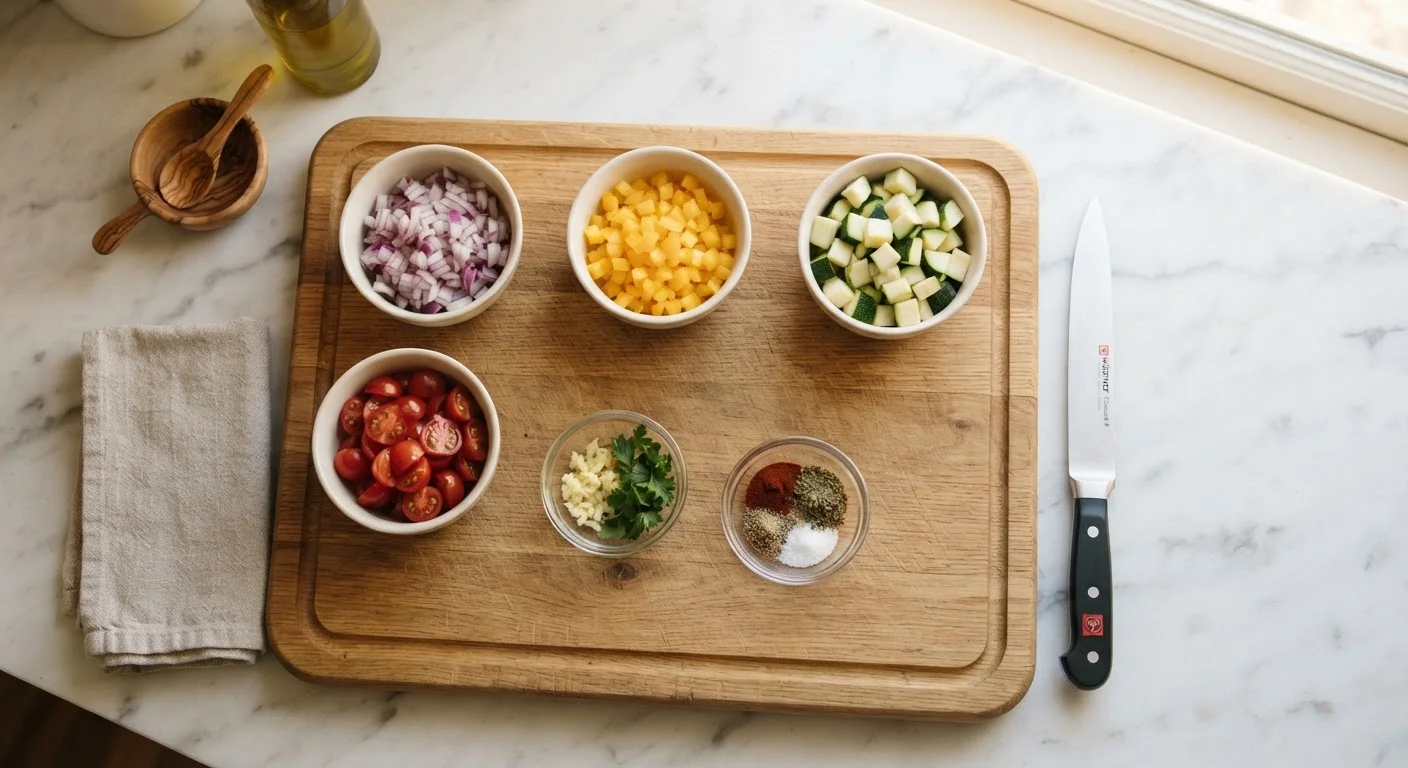
Photo credit: thetastyliving.com
In this article
Learn how the professional kitchen habit of prepping ingredients before cooking cuts waste, speeds up meals, and stretches your grocery dollars further.
Key Takeaways
- Prepping ingredients before cooking reduces the chance of burning food while scrambling for the next item.
- Mise en place helps you spot missing ingredients before a store run becomes necessary mid-meal.
- Portioning during prep prevents over-adding ingredients, which can waste food and money.
- Batch prepping several meals at once multiplies the time and cost savings of the habit.
- A clear workstation makes it easier to use scraps and trimmings instead of discarding them.
What mise en place actually looks like at home
Most home cooks have experienced the same problem: garlic starts to burn while you are still chopping an onion, or you discover halfway through a recipe that you are out of cumin. Both situations waste food and money. Mise en place solves them by separating the thinking and chopping from the cooking itself.
In practice, the process runs like this. Read the recipe fully first. Then measure spices into small bowls or ramekins, chop vegetables and proteins, mince aromatics, and set everything within arm's reach before turning on a single burner. Cooking then becomes a matter of adding what is already ready rather than working and preparing at the same time.
You do not need restaurant equipment. Repurposed deli containers, spare mugs, or a muffin tin all work as prep vessels. The habit matters far more than the tools.
How prep work prevents food and money waste
When cooking is reactive, waste accumulates in small, invisible ways. A handful of spinach wilts while you chase down a missing ingredient. A half-used can of tomatoes gets forgotten in the fridge. Two tablespoons of spice get shaken in when the recipe calls for one. Mise en place interrupts all of these patterns.
Measuring before cooking means you use the intended amount and store the rest properly. Reviewing ingredients before starting reveals gaps early, so you can substitute from the pantry rather than make an unplanned trip. The habit of organizing ingredients before cooking also makes it easier to spot trimmings that belong in a scrap bag for stock rather than the trash.
For a deeper look at how scrap collection connects to savings, see our guide on turning kitchen scraps into homemade stock.
Save trimming time across the week
When you prep one vegetable, prep all of it. If a recipe calls for half a bell pepper, slice the whole pepper and refrigerate the rest in an airtight container. That extra prep takes seconds now and saves setup time for the next two or three meals.
Portioning also helps with appetizers and party food. Over-buying and under-portioning are two of the most common budget problems in appetizer prep, as covered in our article on appetizer prep mistakes that waste money.
Mise en place and batch cooking: a natural pairing
The efficiency of mise en place multiplies when combined with batch cooking. If you are already chopping onions for Tuesday's soup, chopping for Thursday's stir-fry takes only a few extra minutes. The cutting board is out, the knife is clean, and the setup cost is already paid.
Batch cooking for a family of four becomes significantly more manageable when ingredients are prepped in bulk at the start of the week. Sunday prep sessions work well: chop a full bag of carrots, portion ground meat into recipe-sized portions, and wash and dry a full head of lettuce at once. Each of those components then moves straight into cooking throughout the week with no repeated setup.
This approach also pairs naturally with pantry-first meal planning, where you audit what you already have before deciding what to prep. Knowing what is on hand shapes how you portion during prep and prevents buying duplicates.
Building the habit without adding stress
The most common objection to mise en place is that it feels like extra work. That impression fades once the habit becomes routine. The first few times, budget an extra 15 minutes. After a few weeks, the pre-cook inventory and setup become automatic, often taking less time than the interruptions they replace.
Start with one dish per week where prep happens fully before cooking begins. A stir-fry is a practical starting point because the high heat punishes any delay between steps. Once that feels natural, extend the habit to sheet pan meals and slow-cooked dishes.
Families who also use a weekly meal plan get more from this habit. See the family meal planner's guide to cutting food costs for a complete framework that connects planning, prepping, and spending less at the store.
Frequently Asked Questions

Author
Kitchen Tips & Tricks Editorial Team
Kitchen Tips & Tricks Editorial Team is the collective byline for our editorial team and contributor network. Articles published under this byline or an editorial pen name are researched, written, and reviewed according to our editorial standards for clarity, consistency, and independence before publication.
View all articles →