
Dried Beans vs. Canned Beans: Nutrition, Cost, and Convenience Compared
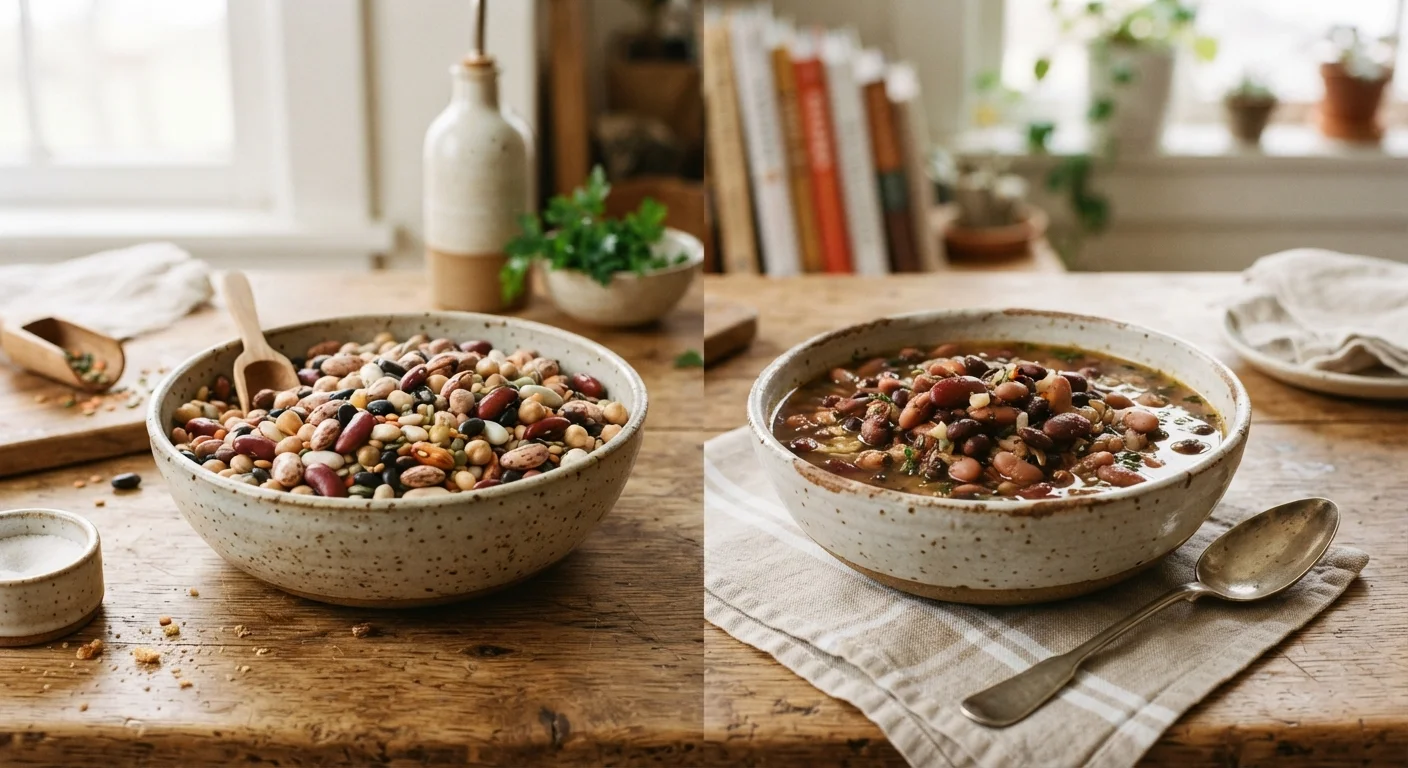
Photo credit: thetastyliving.com
In this article
Weighing dried vs. canned beans on nutrition, sodium content, prep time, and grocery cost so your family can make an informed choice.
Key Takeaways
- Dried beans cost significantly less per serving than canned beans at most US grocery stores.
- Both forms provide comparable protein, fiber, and micronutrients when prepared appropriately.
- Canned beans often contain added sodium; rinsing reduces it by roughly 40 percent.
- Dried beans require soaking and hours of cooking time, while canned beans are ready in minutes.
- A pressure cooker or slow cooker can close the convenience gap for dried beans considerably.
- Either form is a nutritious choice; the best one depends on your available time and pantry goals.
How nutrition compares between the two forms
Dried and canned beans are nutritionally close. Both supply protein, dietary fiber, iron, folate, potassium, and magnesium. A half-cup serving of cooked black beans, whether prepared from dried or opened from a can, delivers roughly 7 to 8 grams of protein and 7 to 8 grams of fiber.
The meaningful difference is sodium. Plain dried beans cooked in unsalted water have near-zero sodium per serving. Standard canned beans can contain 300 to 400 milligrams of sodium per half-cup serving, depending on the brand and variety. Rinsing canned beans under cold water for about 30 seconds removes an estimated 40 percent of that sodium, according to published food science research. Low-sodium or no-salt-added canned beans are widely available and narrow this gap further.
Some water-soluble B vitamins leach into the liquid during canning, so canned beans may have slightly lower folate levels than home-cooked dried beans. The difference is small in practice and unlikely to affect a balanced diet significantly.
Digestive comfort and bean preparation
Some people experience gas or bloating from beans due to naturally occurring oligosaccharides. Soaking dried beans overnight and discarding the soaking water before cooking can reduce these compounds. Rinsing canned beans achieves a similar effect. Starting with smaller portions and building up gradually may also help the digestive system adjust. If digestive symptoms are ongoing or severe, a healthcare provider can assess whether an underlying issue needs attention.
This article is for general informational purposes only and is not medical advice. If you have specific dietary needs related to sodium, kidney function, or chronic conditions, consult a registered dietitian or healthcare provider before making significant changes to your diet.
The real cost difference at the grocery store
Cost is where dried beans pull well ahead. A one-pound bag of dried pinto or black beans typically yields about 6 cups of cooked beans after soaking and simmering. At common US store prices, that works out to roughly 10 to 20 cents per half-cup serving. A standard 15-ounce can of beans provides about 1.5 cups drained, at a cost that usually puts each serving at 30 to 60 cents.
~40%
Sodium reduction from rinsing canned beans
Food science studies on canned legume preparation consistently report this approximate reduction when beans are rinsed under running water.
6 cups
Cooked yield from one pound of dried beans
One pound of most dried bean varieties yields approximately six cups after soaking and cooking, the equivalent of about four standard cans.
For a family eating beans three or four times a week, switching from canned to dried can reduce spending on that ingredient by half or more over a month. That said, the cost math shifts if dried beans go to waste because they spoil before use or because the family lacks time to cook them.
For a deeper look at the budget trade-offs, see the full breakdown of dried vs. canned bean costs. And if you are deciding which appliance to use for batch-cooking dried beans, a comparison of slow cookers and Instant Pots for family cooking can help you choose.
Convenience and prep time
Canned beans win on convenience without contest. Open the can, rinse, and use. Total active time is about two minutes. This matters most on busy school nights when cooking time is limited.
Dried beans require planning. Most varieties benefit from an overnight soak of 8 to 12 hours, which softens them and reduces some compounds that cause digestive discomfort. After soaking, stovetop simmering takes 45 to 90 minutes depending on the bean type. A pressure cooker cuts that to 20 to 30 minutes and eliminates the soaking requirement for many varieties.
| Criterion | Dried Beans | Canned Beans |
|---|---|---|
| Cost per serving (approx.) | 10 to 20 cents | 30 to 60 cents |
| Sodium content | Near zero (unsalted) | 300 to 400 mg (standard) |
| Active prep time | 5 minutes (plus soaking) | 2 minutes |
| Total cook time | 45 to 90 minutes | 0 minutes |
| Shelf life (sealed) | 1 to 2 years or more | 2 to 5 years |
| Texture control | High | Low to moderate |
| Protein per 1/2 cup serving | 7 to 8 grams | 7 to 8 grams |
Batch cooking largely solves the time problem for dried beans. Cooking a large pot on a Sunday and portioning it into the refrigerator or freezer means the beans are just as accessible during the week as canned ones. Batch cooking compared to daily cooking covers how this strategy works across a full week of meals.
Texture is also a factor. Dried beans cooked at home hold their shape and offer a creamier interior. Canned beans are already soft and can become mushy if overcooked further, which matters for dishes like bean salads or roasted bean snacks. For soups, stews, and dips, either texture works well. Understanding how different food forms affect texture and flavor in recipes applies the same principle across other pantry staples.

Author
Nutrition Editorial Team
Nutrition Editorial Team is the collective byline for our editorial team and contributor network. Articles published under this byline or an editorial pen name are researched, written, and reviewed according to our editorial standards for clarity, consistency, and independence before publication.
View all articles →