
Knife Skills Every Home Cook Should Know Before Buying More Equipment
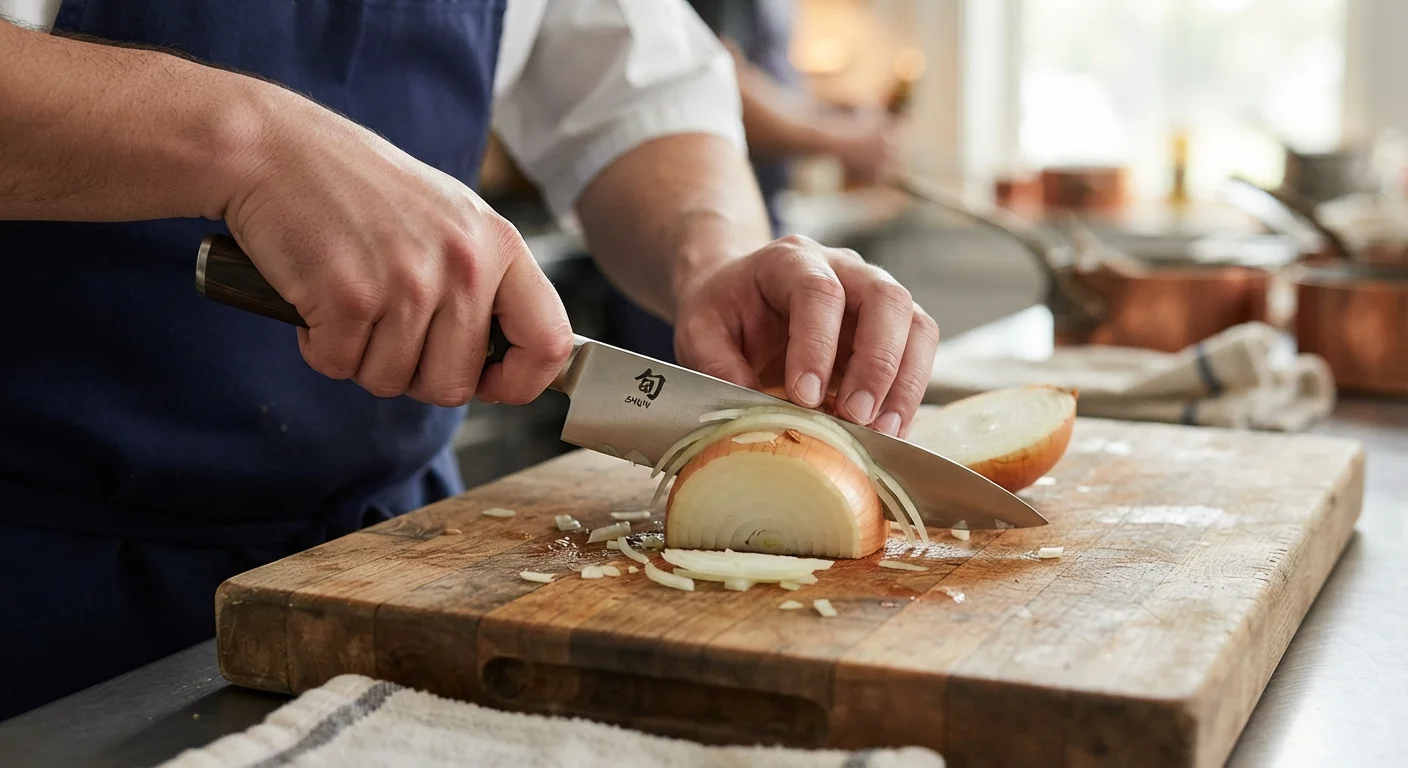
Photo credit: thetastyliving.com
In this article
A sharp knife and solid cutting technique can replace a surprising number of single-use gadgets. Here are the core skills worth learning first.
Key Takeaways
- A well-sharpened chef's knife handles most cutting tasks that single-use gadgets are marketed to solve.
- The claw grip, rocking motion, and stable cutting board form the foundation of safe, efficient knife work.
- Learning to julienne, dice, and chiffonade vegetables reduces prep time and stretches ingredients further.
- Consistent cut sizes cook food evenly, which reduces waste from unevenly cooked batches.
- A dull knife is more dangerous than a sharp one because it requires more force and slips more easily.
Why knife skills save money before anything else
Before buying a mandoline, a food processor, or a set of specialty slicers, it is worth asking what a single good knife can already do. The answer is: most of it. Julienned carrots, minced garlic, chiffonaded herbs, and paper-thin cucumber rounds are all achievable with a standard chef's knife once the technique is solid.
Single-use gadgets solve problems that skilled knife work already handles. When families cook with confidence at the cutting board, they also waste less food. Uniform cuts mean vegetables cook at the same rate, so nothing turns to mush while the rest finishes. That consistency matters when you are stretching a bunch of celery or half a cabbage across two meals. See how prep habits connect to grocery savings in our guide to mise en place on a budget.
The cuts worth learning first
Not every classical knife cut belongs in a home kitchen. The four below cover the vast majority of weeknight cooking and appetizer prep.
The rough chop
Use this for aromatics going into soups, stews, or stocks where texture disappears during cooking. Halve the vegetable, make a series of lengthwise cuts, then crosscut. Precision does not matter here.
The medium dice
Aim for roughly half-inch cubes. Square off the vegetable first by trimming the sides into flat planks, then cut into strips (called batons), then crosscut into cubes. This is the standard for salsa, stir-fries, and roasted vegetables.
The julienne
Thin matchsticks, usually around two inches long. Start with planks, then cut each plank lengthwise into strips. Julienned vegetables cook quickly over high heat and are useful for fast weeknight stir-fries built from pantry staples. Our pantry staples dinner guide shows exactly which vegetables pair well with shelf-stable ingredients.
The chiffonade
Stack leafy herbs or greens, roll them tightly into a cylinder, and cut across the roll into thin ribbons. This technique works for basil, mint, spinach, and even cabbage. It is faster and less wasteful than tearing by hand.
Once these four cuts feel comfortable, you will have the foundation for most simple finger foods and weeknight dinners without reaching for a specialty tool.
Keeping your knife sharp and your board stable
A dull knife is the most common reason home cooks feel unsafe at the cutting board. When a blade does not bite into food cleanly, cooks apply more downward force, and that force is what causes slips. A sharp knife requires less pressure and follows the intended path.
A honing steel (the long rod that often comes with knife sets) does not sharpen a blade; it realigns the microscopic edge between sharpenings. Running the blade down the steel at roughly 15 to 20 degrees before each session keeps the edge performing well for longer. Full sharpening on a whetstone or with a pull-through sharpener is needed every few months depending on use frequency.
An unstable cutting board creates the same slip risk as a dull knife. Place a damp kitchen towel or a piece of shelf liner underneath the board before cutting. This takes three seconds and prevents the board from sliding mid-cut. These small setup habits connect directly to kitchen organization habits that reduce both food waste and frustration.
Putting it all together at the cutting board
Good knife work is not about speed. Speed follows accuracy after enough repetition. The goal is to build a short, consistent routine: stable board, sharp knife, claw grip, deliberate cuts.
The claw grip positions the fingers so the knuckles guide the blade while the fingertips curl safely away. The knife never needs to lift fully off the board during a forward cut; the tip stays in contact with the board and acts as a pivot while the heel rocks down through the food. This rocking motion is why the technique is sometimes called the rock chop.
Once these habits are in place, they also speed up meal planning. Prepping a large batch of diced onion or julienned peppers at the start of the week means those ingredients are ready for multiple meals. That kind of batch prep strategy reduces both cooking time and the impulse to order takeout on busy nights. For cooks thinking about flavor alongside technique, understanding salt, acid, fat, and heat is the natural next step after knife skills are solid.

Author
Kitchen Tips & Tricks Editorial Team
Kitchen Tips & Tricks Editorial Team is the collective byline for our editorial team and contributor network. Articles published under this byline or an editorial pen name are researched, written, and reviewed according to our editorial standards for clarity, consistency, and independence before publication.
View all articles →