
Brown Rice vs. White Rice: Which One Actually Belongs in a Balanced Diet?
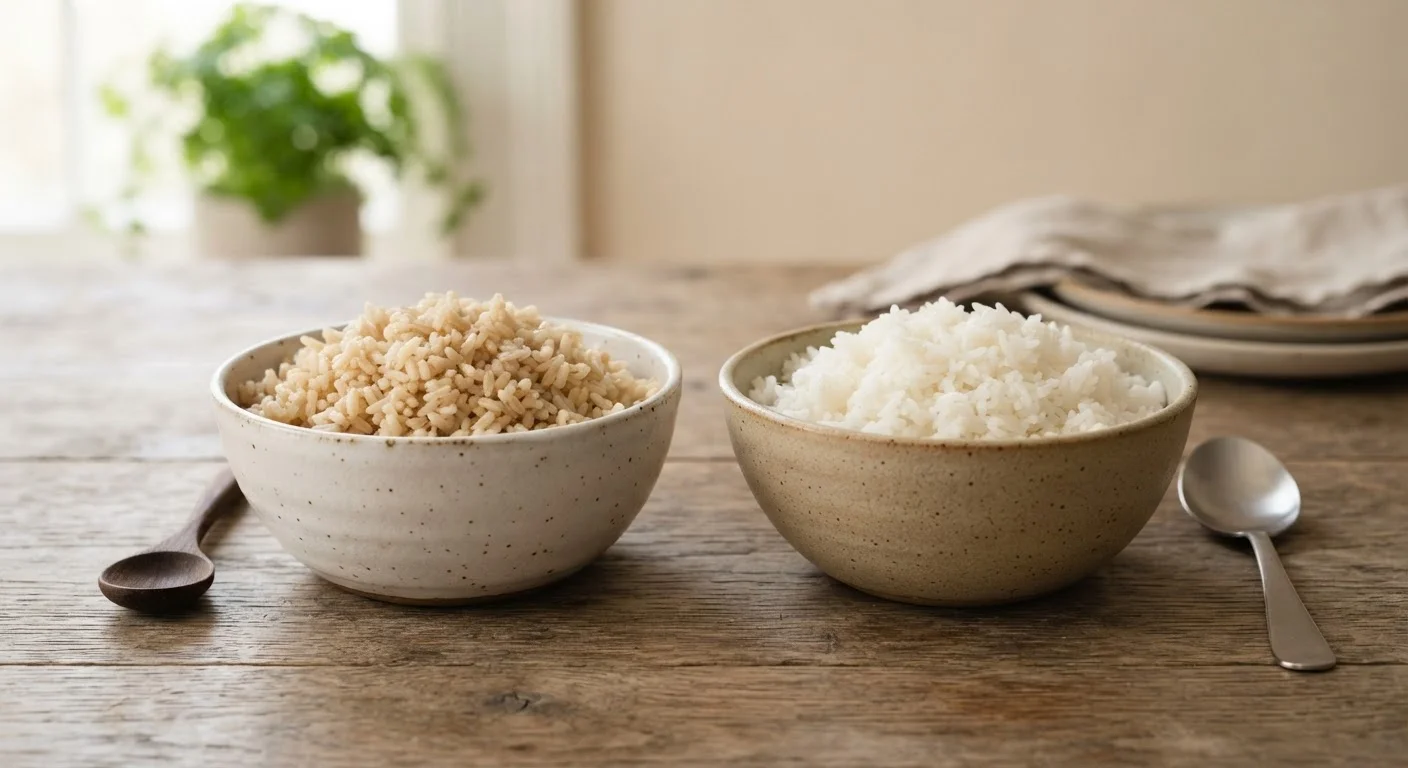
Photo credit: thetastyliving.com
In this article
A side-by-side look at brown and white rice on fiber, glycemic index, cost, and cooking time to help families decide what works for them.
Key Takeaways
- Brown rice retains its bran and germ layers, giving it more fiber and several B vitamins than white rice.
- White rice has a higher glycemic index than brown rice, meaning it raises blood sugar more quickly.
- Both grains are naturally gluten-free and can fit into a balanced, affordable family diet.
- Brown rice takes about twice as long to cook as white rice, which matters for weeknight meal planning.
- Enriched white rice has iron and B vitamins added back after milling, partly closing the nutrient gap.
- Choosing between them depends on individual health goals, cooking time, and how the rest of the meal is built.
What processing does to each grain
Both brown and white rice start as the same grain. Brown rice is the whole grain: only the outermost husk is removed, leaving the bran and germ layers intact. White rice goes further through milling, which strips away the bran and germ to produce the smooth, white grain most American families recognize.
That extra milling step removes a meaningful share of fiber, magnesium, phosphorus, and B vitamins including thiamine, niacin, and B6. To offset this, most white rice sold in the US is enriched, meaning manufacturers add back iron and certain B vitamins after processing. However, the added fiber cannot be restored, so white rice consistently delivers less fiber per serving regardless of enrichment.
A standard three-quarter cup cooked serving of brown rice has about 2 grams of fiber. The same serving of white rice has roughly 0.5 grams. For a family eating rice several times a week, that gap adds up across the day.
| Criterion | Brown rice | White rice |
|---|---|---|
| Fiber (per 3/4 cup cooked) | ~2 g | ~0.5 g |
| Glycemic index (approx.) | 50 to 55 (medium) | 64 to 72 (high) |
| B vitamins | Naturally present | Added back via enrichment |
| Stovetop cook time | 40 to 50 minutes | 15 to 18 minutes |
| Typical cost per pound | Slightly higher | Lower |
| Shelf life (pantry) | About 6 months | Several years |
| Whole grain status | Yes | No |
Glycemic index and blood sugar response
The glycemic index (GI) measures how quickly a carbohydrate food raises blood glucose compared to pure glucose. White rice typically scores in the high range, around 64 to 72 on most published scales. Brown rice generally scores in the medium range, roughly 50 to 55, depending on variety and cooking method.
A lower GI is broadly associated with more gradual blood sugar rises, which can be relevant for people managing or reducing the risk of type 2 diabetes. The American Diabetes Association lists whole grains, including brown rice, among foods that can support blood sugar management as part of an overall balanced eating pattern.
That said, GI does not tell the whole story. Portion size, what you eat alongside the rice, and how the rice is cooked all affect the actual glycemic response. Adding vegetables, beans, or a protein source to a white rice dish changes how quickly that carbohydrate is absorbed. No single ingredient determines the healthfulness of a meal.
This article is for general nutrition information only and is not medical or dietary advice. If you have diabetes or another condition affected by carbohydrate intake, consult a registered dietitian or physician before changing your diet.
Cost, availability, and cooking time
White rice is consistently less expensive per pound than brown rice at most US grocery stores. A two-pound bag of store-brand long-grain white rice typically costs less than a comparable bag of brown rice, though prices vary by region and retailer. For families on tight grocery budgets, that difference across a month of meals is real.
Brown rice takes 40 to 50 minutes to cook on the stovetop. White rice takes 15 to 18 minutes. One practical workaround for brown rice is to cook a large batch on the weekend and refrigerate or freeze individual portions, which cuts weeknight prep to a simple reheat.
~3x
More fiber in brown vs. white rice
Per standard serving comparisons published by the USDA FoodData Central database.
48%
Of Americans eat grains daily
According to USDA dietary survey data, rice is among the most commonly consumed grain foods in the US.
50%
Of daily grains should be whole grains
The Dietary Guidelines for Americans recommend that at least half of all grain servings come from whole-grain sources.
Both varieties store well in a sealed container. White rice stored in a cool, dry place keeps for years. Brown rice has a shorter shelf life, around six months at room temperature, because the bran layer contains natural oils that can go rancid. Refrigerating brown rice extends its usable life.
How to work both grains into a family diet
There is no nutritional rule that forces a binary choice. Many families find it practical to keep both grains on hand and use them for different meals. Brown rice works well in grain bowls, stir-fries, and soups where its chewier texture holds up. White rice is more suited to quick weeknight sides, dishes where a neutral base is needed, or meals with young children at the table.
Mixing the two grains during cooking, starting brown rice first and adding white rice partway through, is a method some cooks use to get a middle-ground texture and a modest fiber increase over plain white rice.
The broader context of the meal matters as much as the grain choice. A plate of white rice alongside a generous serving of vegetables and a protein source delivers solid nutrition. A bowl of brown rice with little else is not automatically a complete meal. Dietary guidelines from the U.S. Department of Agriculture suggest that at least half of grain servings come from whole grains, which brown rice satisfies and white rice does not. That guidance is a reasonable benchmark, not a strict requirement that every single serving be a whole grain.

Author
Nutrition Editorial Team
Nutrition Editorial Team is the collective byline for our editorial team and contributor network. Articles published under this byline or an editorial pen name are researched, written, and reviewed according to our editorial standards for clarity, consistency, and independence before publication.
View all articles →