
Before You Cook Chicken Thighs, Read This
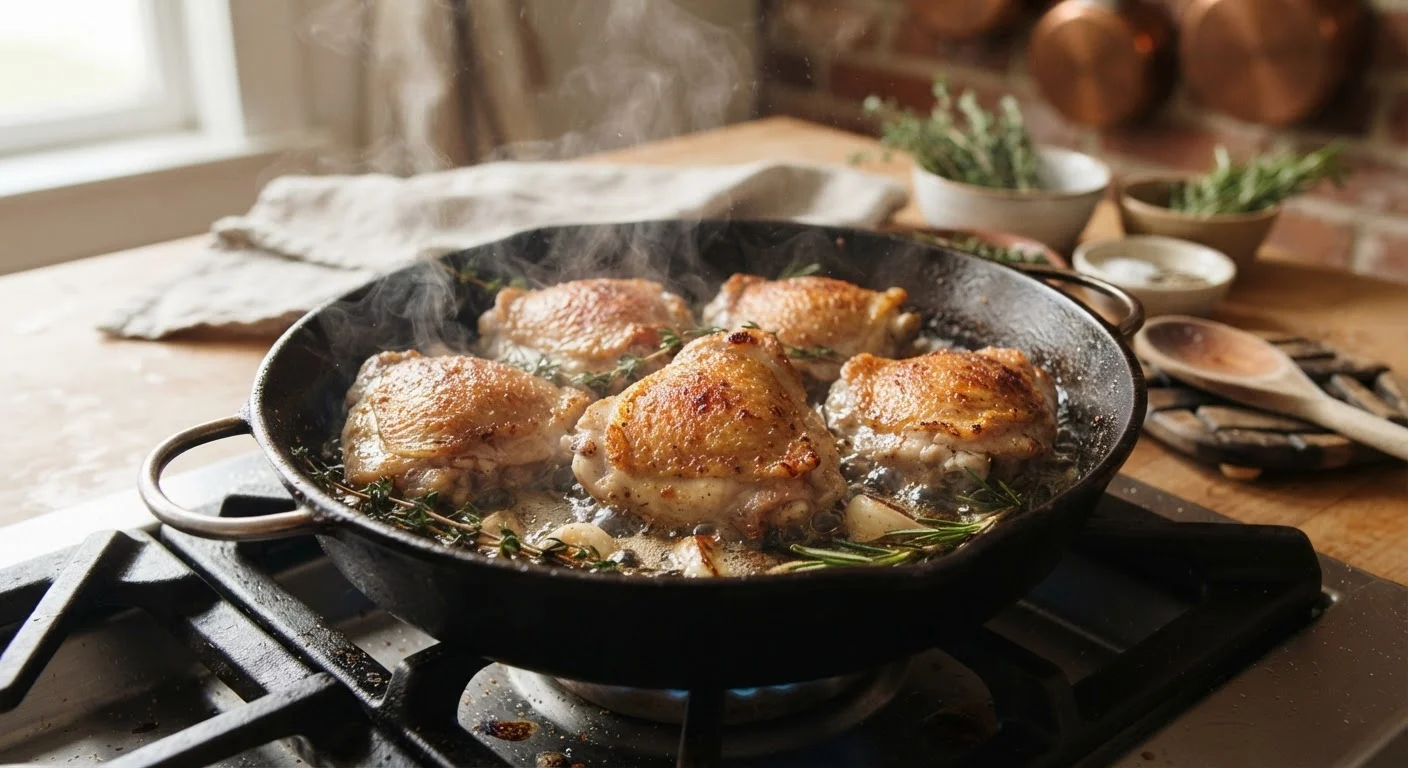
Photo credit: thetastyliving.com
In this article
Chicken thighs are one of the most forgiving budget proteins, yet common prep and cooking errors still ruin them. Here's what to watch for.
Key Takeaways
- Skipping a dry pat before cooking leaves moisture on the skin that prevents browning.
- Cooking thighs straight from the fridge extends cook time unevenly and risks undercooked meat.
- Crowding the pan traps steam, turning what should be crispy skin into something pale and soft.
- Internal temperature matters more than time: pull thighs at 165 degrees F minimum.
- Resting the meat after cooking keeps juices in the thigh instead of on your cutting board.
Why chicken thighs deserve your attention
Chicken thighs cost less per pound than breasts in most grocery stores, carry more fat, and tolerate heat well enough that a minute or two of overcooking rarely ruins them. That fat is the reason thighs stay juicy under conditions that would dry out a breast. For families watching grocery budgets, a pack of bone-in, skin-on thighs can anchor several meals in a week. The meal planning basics around a versatile protein like this one pay off fast.
The problem is that even a forgiving cut has limits. A handful of consistent prep and cooking errors still produce pale, rubbery, or unevenly cooked thighs. Fixing those errors costs nothing except a few minutes of attention.
The mistakes that ruin chicken thighs
Below are the most common errors home cooks make with thighs, why those errors happen, and exactly what to do instead. Good prep work before cooking eliminates several of these mistakes before the pan even gets hot.
Cooking thighs straight from the refrigerator without resting them at room temperature first.
Why it happens: Most recipes skip this step entirely, and home cooks assume the oven or pan compensates automatically.
Skipping the step of patting the skin dry before cooking.
Why it happens: Surface moisture seems harmless, but it creates steam in the pan that works against browning.
Crowding multiple thighs into a pan that is too small.
Why it happens: Cooks want to finish the whole batch at once, and the thighs often fit in the pan by area, even when they are too close together.
Flipping thighs too early when cooking skin-side down.
Why it happens: It looks like the skin is burning, or the cook is anxious about sticking.
Pulling thighs off the heat based on time alone rather than internal temperature.
Why it happens: Recipe cook times are estimates based on average thigh size. Bone-in thighs from different packs vary considerably in thickness.
Cutting into the thigh immediately after it comes off the heat.
Why it happens: Hunger and time pressure push cooks to plate and serve the moment the pan comes off the burner.
Getting the most from every batch you cook
Chicken thighs are well-suited to sheet pan meals, but even there the same rules apply. Sheet pan dinners work best when thighs are spaced apart on the pan and the oven temperature is high enough to render the fat in the skin. A 400-degree oven is a reasonable floor for skin-on thighs roasted on a sheet pan.
Do not rely on color alone for doneness
Chicken thighs stay dark pink near the bone even when fully cooked, because the myoglobin in dark meat behaves differently under heat than white meat does. A pink tint close to the bone is not a reliable sign of undercooking. Always verify doneness with an instant-read thermometer at 165 degrees F minimum. If you do not own one, a basic model costs a few dollars and removes the guesswork entirely.
When you have leftovers, the way you reheat matters almost as much as the original cook. Reheating fixes for leftovers that preserve moisture include using a low oven rather than a microwave, and adding a small splash of broth to the pan before covering it.
Once you have a reliable method for thighs, the same attention to temperature and spacing transfers to other proteins. If you are also building out a weeknight appetizer rotation, simple finger foods for new cooks follow many of the same principles around heat management and not rushing the process.

Author
Dinner & Dessert Editorial Team
Dinner & Dessert Editorial Team is the collective byline for our editorial team and contributor network. Articles published under this byline or an editorial pen name are researched, written, and reviewed according to our editorial standards for clarity, consistency, and independence before publication.
View all articles →