
Sheet Pan Appetizers: Less Cleanup, Lower Cost, Big Flavor
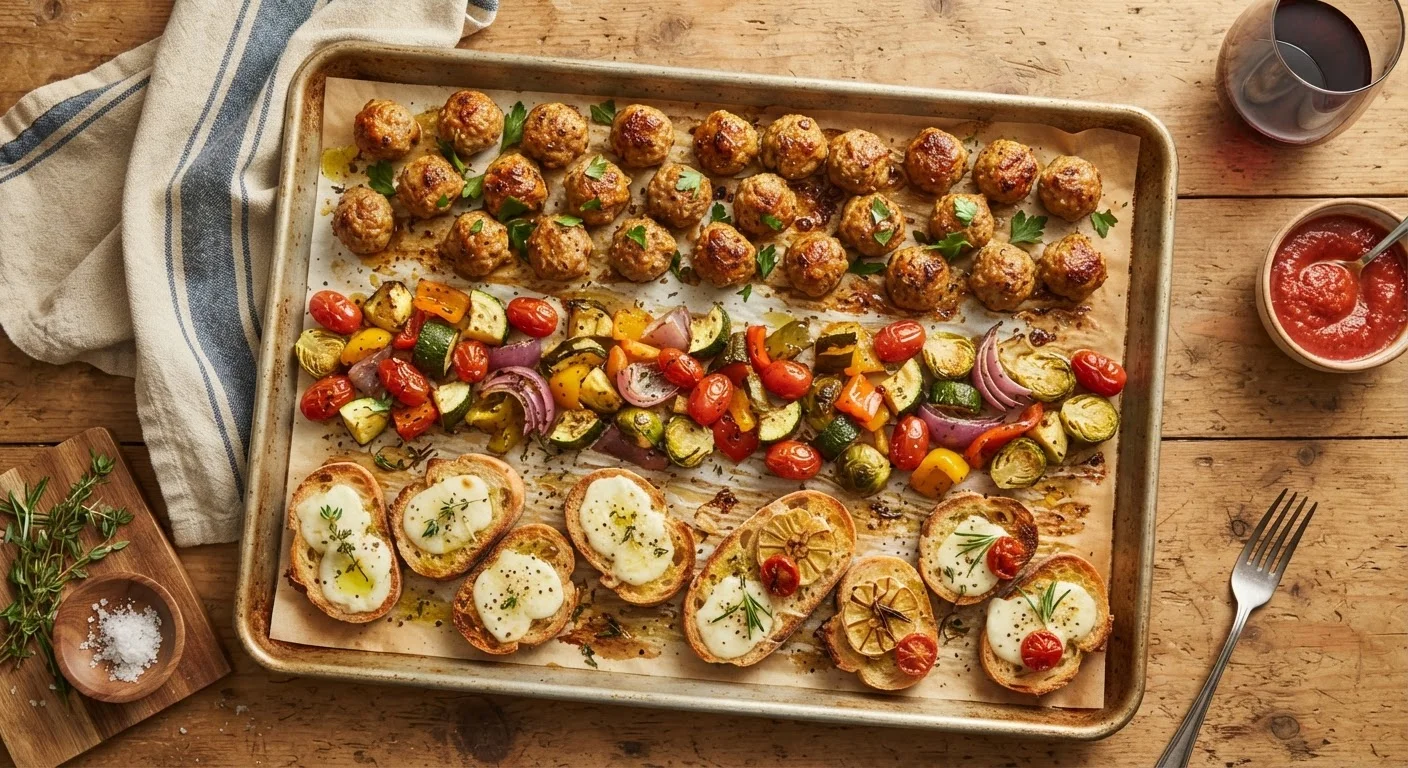
Photo credit: thetastyliving.com
In this article
Sheet pan cooking is one of the easiest ways to make multiple appetizers at once while keeping ingredient costs and kitchen cleanup to a minimum.
Key Takeaways
- A single sheet pan can hold multiple appetizer varieties at once, cutting both cook time and cleanup.
- Inexpensive ingredients like canned beans, frozen vegetables, and bread dough perform well under high oven heat.
- Uniform piece sizing is the most important factor for even cooking across a crowded pan.
- Parchment paper eliminates most scrubbing and prevents sticking without adding cost.
- Sheet pan appetizers scale up easily for parties without requiring additional equipment or skill.
Why sheet pans work so well for appetizers
Sheet pan cooking is popular for weeknight dinners, but the method fits appetizers even better. Appetizers are small, varied, and meant to be served together, which is exactly what a rimmed baking sheet handles naturally. You can line half the pan with stuffed mushrooms and the other half with seasoned flatbread wedges, slide it into a hot oven, and pull out two finished dishes at the same time.
The heat circulation in a standard oven does the work. High temperatures (400 to 425 degrees Fahrenheit) crisp surfaces, concentrate flavors, and cook small bites quickly without constant attention. That hands-off window is when you set out plates, pour drinks, or prep a dip. For a full picture of how this method functions across different meal types, see sheet pan cooking basics.
Cost follows naturally from the format. You are not deep-frying, which requires oil in quantity. You are not using multiple pots, which means less energy and less washing. The pan itself is inexpensive and lasts for years.
Best practices for sheet pan appetizers
Following a few consistent habits separates a nicely browned tray of bites from a soggy, unevenly cooked batch.
Budget ingredients that thrive on a sheet pan
Not every ingredient benefits from oven roasting, but many of the most affordable ones do. Canned chickpeas, drained and dried, turn crispy at 400 degrees and need only olive oil, salt, and any spice you have on hand. Frozen broccoli florets roast well straight from the freezer if you spread them in a single layer. Day-old bread becomes crostini with a brush of oil and 8 minutes of heat.
Eggs and shredded cheese are budget-friendly binders that hold fillings inside hollowed vegetables like halved peppers or zucchini rounds. Canned black beans mashed with garlic and cumin make a dense, protein-rich topping for tortilla chip rounds that hold up through baking. For more pantry-sourced starting points, pantry staples for appetizers is a useful reference.
Ground meat stretched with breadcrumbs and seasonings goes a long way on a sheet pan. A half-pound of ground turkey mixed with an egg, onion powder, and parsley yields roughly 24 small meatballs that cook evenly in about 18 minutes. That per-piece cost is typically far lower than store-bought frozen options. Frozen versus homemade appetizers breaks down that comparison in more detail.
Scaling up for a crowd without doubling your work
One sheet pan feeds roughly 6 to 8 people as part of a larger appetizer spread. Two pans, staggered on the upper and lower oven racks and rotated once halfway through cooking, handle 12 to 16 people without any change in technique. The only adjustment is timing: pull the pans out one at a time so items stay warm longer, or use a low-heat oven (200 degrees) to hold finished bites while the second pan finishes.
Prep work scales efficiently because most sheet pan appetizers involve the same repeated motion: cut, season, arrange. Doing that for 20 pieces takes only slightly longer than doing it for 40. Party appetizer planning covers how to match quantities to guest counts so you avoid over-buying ingredients. Buying a bit more of the same cheap ingredients is almost always the right move when scaling, rather than adding new items that require separate shopping and extra prep.
Sheet pan appetizers also hold better than fried foods. Most remain acceptable at room temperature for 20 to 30 minutes, which gives you a realistic serving window without reheating. That flexibility matters at gatherings where people arrive at different times.

Author
Appetizers Editorial Team
Appetizers Editorial Team is the collective byline for our editorial team and contributor network. Articles published under this byline or an editorial pen name are researched, written, and reviewed according to our editorial standards for clarity, consistency, and independence before publication.
View all articles →