
Sheet Pan Cooking: The Weeknight Method That Cuts Cleanup and Costs
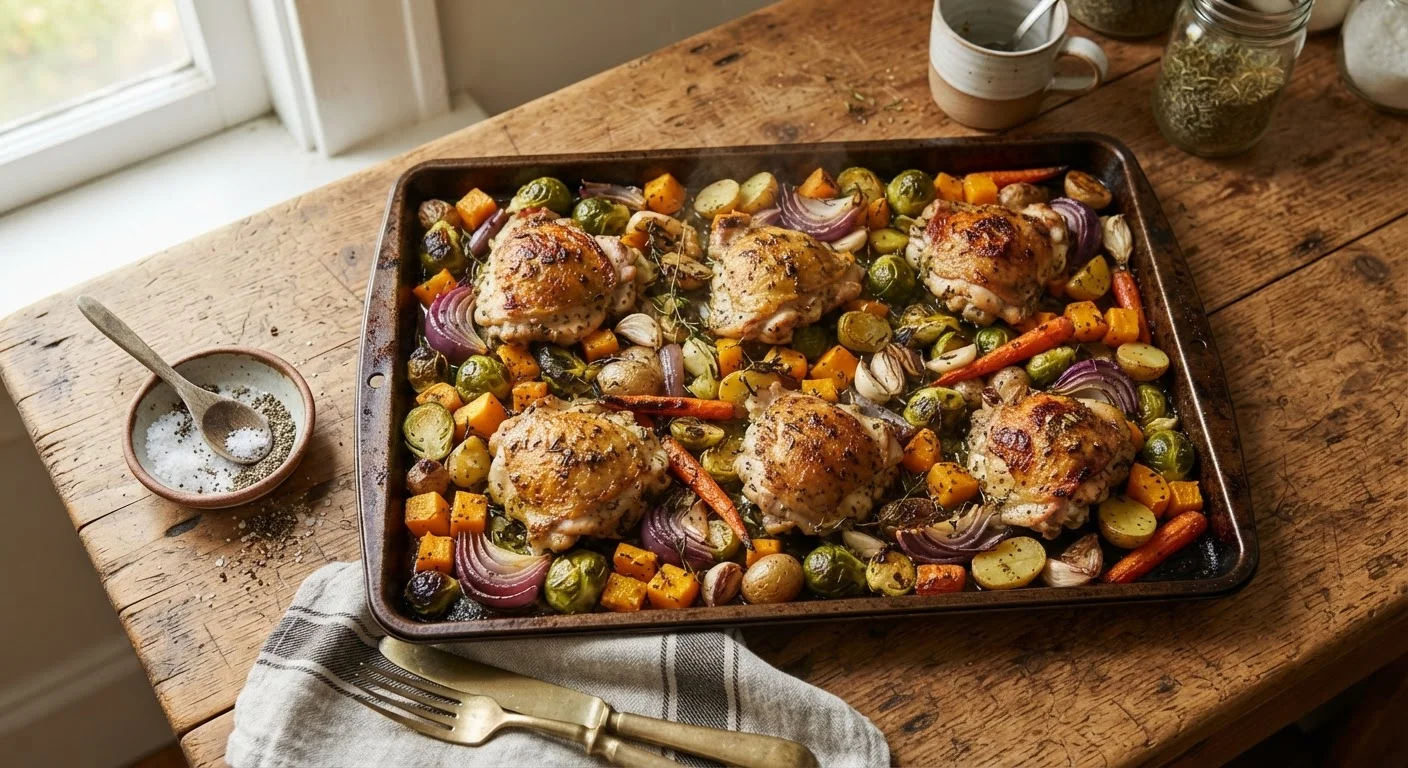
Photo credit: thetastyliving.com
In this article
Sheet pan meals use inexpensive ingredients, require minimal equipment, and leave almost no dishes. A practical breakdown of how the method actually works.
Key Takeaways
- Sheet pan cooking uses a single pan, one heat source, and minimal prep to produce a complete meal.
- Pairing a protein with starchy and non-starchy vegetables on one pan controls ingredient cost naturally.
- Proper pan selection and spacing prevent steaming, which is the most common reason sheet pan meals disappoint.
- Most sheet pan meals cook at 400 to 425 degrees Fahrenheit, which suits a wide range of proteins and vegetables.
- Cleanup drops to one pan, one cutting board, and one knife when the method is followed consistently.
Why this method fits tight budgets
Sheet pan cooking works well for families watching grocery costs because the method is built around whatever is affordable that week. A pound of chicken thighs, two sweet potatoes, and a handful of broccoli florets can fill a half-sheet pan and feed four people. There is no specialized equipment to buy and no technique that requires practice beyond chopping and tossing ingredients in oil.
The cost control comes partly from how the method structures a meal. One protein anchor, one or two starchy vegetables, and one or two non-starchy vegetables together cover a nutritional range without requiring expensive sauces or multiple cooking vessels. When you stock a few pantry staples, the variable cost per meal drops further because oil, salt, and basic dried spices are already on hand.
Compared to cooking from meal kits, sheet pan meals made from scratch typically cost less per serving with no subscription or per-box markup. The method also generates minimal food waste when planned around ingredients already in the house. For practical guidance on that habit, see pantry-first meal planning.
What you need before you start
Sheet pan cooking requires very little equipment, but the pan itself matters. A heavy-gauge, rimmed half-sheet pan (18 by 13 inches) distributes heat evenly and holds enough food for a family of four without crowding. Thin, flimsy pans warp at high oven temperatures, which causes uneven browning and can create hot spots that burn smaller pieces.
Lining the pan with parchment paper or a silicone baking mat reduces cleanup to almost nothing and prevents sticking without adding fat. Aluminum foil works but can affect browning on the bottom of vegetables.
What you will need
Rimmed half-sheet pan
Holds all ingredients on one surface and contains any cooking juices or oil runoff.
Parchment paper or silicone baking mat
Lines the pan to prevent sticking and cut cleanup to almost nothing.
Instant-read thermometer
Confirms that proteins have reached a safe internal temperature without cutting into them prematurely.
Large mixing bowl
Holds vegetables and protein while you toss them with oil and seasoning before spreading onto the pan.
How to build and cook a sheet pan meal
The steps below apply to the majority of protein-and-vegetable combinations. Adjustments for specific ingredients are noted in the step tips.
Preheat the oven to 400 to 425 degrees Fahrenheit
Set your oven to 400 degrees F for bone-in proteins or dense root vegetables that need longer cooking, or 425 degrees F for boneless cuts and tender vegetables that cook faster. Allow at least 15 minutes for the oven to reach temperature before the pan goes in. A cold oven start produces steamed rather than roasted results.
Cut ingredients to appropriate sizes
Cut your protein and vegetables so that items with similar cooking times are roughly the same size. Dense vegetables like carrots or potatoes should be cut into pieces no larger than 1 inch. Tender vegetables like zucchini or bell peppers can be cut slightly larger. Chicken thighs and drumsticks can go on whole; boneless breasts benefit from being cut in half to match cooking time with the vegetables.
Toss all ingredients with oil and seasoning
Place everything in a large bowl and drizzle with 2 to 3 tablespoons of oil. Season with salt, pepper, and any dried herbs or spices you have available. Toss until every piece is lightly coated. This step is what enables browning: bare spots where oil has not reached tend to dry out and stick.
Arrange ingredients on the pan with space between pieces
Spread everything in a single layer, leaving at least half an inch of space between individual pieces. Crowding is the most reliable way to ruin a sheet pan meal. If your ingredients do not fit with space between them, divide them between two pans rather than stacking or overlapping. Place the protein in the center of the pan and the vegetables around the perimeter where heat is more intense.
Roast and check for doneness
Slide the pan into the oven on the center rack. For most combinations at 400 to 425 degrees F, boneless chicken pieces take 20 to 25 minutes, bone-in pieces take 35 to 45 minutes, and most vegetables take 20 to 35 minutes depending on density. Check once about two-thirds through cooking and rotate the pan if one side is browning faster. Confirm protein doneness with an instant-read thermometer: chicken should reach 165 degrees F, pork 145 degrees F.
Common problems and how to fix them
The most frequent issue with sheet pan meals is soggy vegetables. This happens when too many ingredients are packed onto one pan. Moisture released during roasting has nowhere to go, so food steams rather than roasts. The fix is to use two pans or to reduce the total volume of ingredients.
Uneven cooking is the second common problem. Dense vegetables like carrots and beets take longer than tender ones like zucchini or cherry tomatoes. Cutting denser vegetables smaller and placing them toward the outer edges of the pan, where heat is higher, compensates for the difference.
For a broader look at where this cooking method works well and where it can let you down, see this honest review of sheet pan dinners. Preparing your ingredients before the oven preheats also removes a major source of timing errors. The habit of prepping ingredients before cooking applies directly here and takes only a few extra minutes.

Author
Kitchen Tips & Tricks Editorial Team
Kitchen Tips & Tricks Editorial Team is the collective byline for our editorial team and contributor network. Articles published under this byline or an editorial pen name are researched, written, and reviewed according to our editorial standards for clarity, consistency, and independence before publication.
View all articles →