
The Truth About 'Cheap' Meal Kits vs. Cooking From Scratch
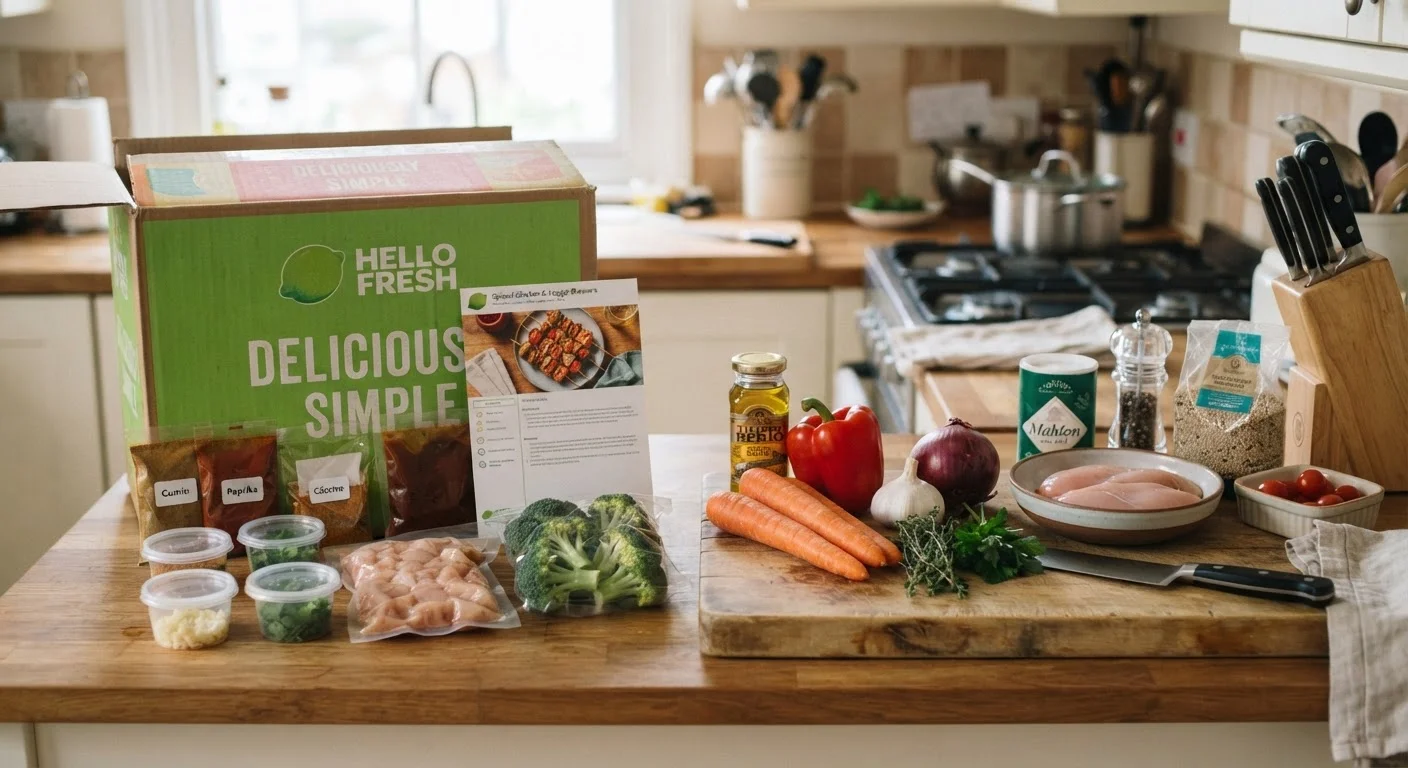
Photo credit: thetastyliving.com
In this article
Meal kits market themselves as convenient and affordable. Here's what the actual per-serving costs look like compared to scratch cooking.
Key Takeaways
- Meal kit per-serving costs typically run two to three times higher than equivalent scratch-cooked meals.
- Convenience fees, packaging, and pre-portioning account for much of the meal kit price premium.
- Scratch cooking from a planned grocery list is the most reliable way to cut weekly food spending.
- Batch cooking and simple prep habits can close the time gap that makes meal kits appealing.
- Occasional meal kit use is not inherently wasteful, but it should not be mistaken for a budget strategy.
What meal kits actually cost per serving
Meal kit services typically price their offerings at somewhere between $8 and $12 per serving, depending on the plan, the number of people, and the recipe tier. A family of four paying $10 per serving spends $40 on a single dinner. That figure does not include shipping, which is often waived only for the first box and then added to subsequent orders at $8 to $10 per delivery.
Scratch cooking the same type of meal, a protein with two sides, generally costs $2 to $4 per serving when ingredients are purchased from a standard grocery store without relying on sales. A chicken stir-fry with rice and vegetables made from scratch for four people can land at $10 to $14 total. The math is not close.
The gap widens further when you account for how meal kits portion ingredients. You receive exactly what the recipe calls for, which eliminates leftover components. That sounds efficient, but it also means you cannot stretch a $6 bag of rice across five meals the way you can at home. Every kit is a closed transaction.
Myth
Meal kits are an affordable way to feed a family on a budget.
Fact
Meal kits cost significantly more per serving than scratch cooking from a grocery list.
The per-serving price of most meal kits sits between $8 and $12, before shipping. Scratch-cooked dinners using whole ingredients typically cost $2 to $4 per serving. The convenience and logistics built into a kit account for the difference, not superior ingredients. Families looking to reduce food spending will find that even simple scratch meals outperform kits on cost in almost every comparison.
Myth
You waste less food with meal kits because ingredients are pre-portioned.
Fact
Pre-portioning reduces leftover ingredients but also eliminates the ingredient reuse that makes scratch cooking economical.
When you buy a full head of cabbage, you might use it across three meals. A meal kit sends exactly the quarter-head the recipe needs, so nothing is wasted in the box, but you also cannot stretch that cabbage further. Scratch cooking with a planned grocery list reduces waste through intentional reuse across multiple meals, which lowers the effective per-serving cost well below what pre-portioned kits can achieve.
Myth
Meal kits save time compared to scratch cooking, which makes the higher cost worth it.
Fact
The time advantage of meal kits shrinks considerably when scratch cooks use batch prep and simple weeknight methods.
Meal kits eliminate shopping and planning but still require active cooking time, often 30 to 45 minutes. Batch-prepped scratch meals can reach the table in similar time once components are ready. Sheet pan dinners, stir-fries built on pre-cooked rice, and slow cooker meals often require less active attention than following a kit's recipe card. The time savings from kits are real but smaller than the marketing implies.
Myth
Meal kit ingredients are fresher or higher quality than what you buy at a grocery store.
Fact
Meal kit produce and proteins come from the same commercial supply chains as grocery stores, and freshness depends on shipping time.
Meal kit companies source ingredients from standard commercial distributors. By the time a box ships, travels through a cold-chain network, and arrives at your door, the produce may be no fresher than what you pick up at a local store that morning. Proteins, particularly fish and chicken, can arrive near the end of their refrigeration window if shipping is delayed. Buying whole ingredients from a store you trust and cooking them promptly gives you more control over freshness.
The real source of the price difference
Meal kit pricing reflects logistics and labor, not food quality. Each box requires refrigerated packaging, individual portioning, recipe printing, cold-chain shipping, and customer service overhead. Those costs transfer to the consumer in every order. You are paying for a system, not just groceries.
Pre-prepped ingredients also carry a markup that grocery stores apply to any value-added product. Pre-minced garlic costs more per ounce than a whole head. Pre-marinated chicken costs more than raw chicken breast. Meal kits apply the same principle at scale across every component in the box.
Scratch cooking avoids those layers entirely. When you prep ingredients before cooking, you handle the chopping, measuring, and portioning yourself, and the grocery cost reflects only the raw ingredient. A head of garlic costs around $0.50. The equivalent minced garlic in a meal kit portion may cost three to four times that on a per-use basis.
$8-$12
Average meal kit cost per serving
Most major meal kit services in the U.S. price standard plans in this range, excluding shipping fees.
$2-$4
Typical scratch dinner cost per serving
Home-cooked meals using whole ingredients from a standard grocery store generally fall in this range for common weeknight recipes.
3x
Rough cost multiple of kits vs. scratch
At midpoint estimates, meal kits cost roughly three times as much per serving as a comparable scratch-cooked dinner.
Why scratch cooking feels harder than it is
The main argument for meal kits is time, not cost. When a weeknight is already packed, the idea of planning a menu, building a grocery list, shopping, prepping, and cooking from zero sounds exhausting. Meal kits compress that chain into one box and a recipe card.
What that framing misses is that the time cost of scratch cooking drops sharply with planning. Batch cooking one afternoon a week can produce components, cooked grains, roasted vegetables, and portioned proteins that turn weeknight dinners into assembly rather than full cooking sessions. The work front-loads rather than disappears, but the per-night effort becomes comparable to opening a meal kit box.
Sheet pan meals are another practical shortcut. Toss a protein and whatever vegetables are on hand with oil and seasoning, roast at high heat, and dinner is ready in 25 to 30 minutes with minimal cleanup. The ingredient cost for a sheet pan chicken dinner for four typically stays under $12 total, and no subscription is required.
When meal kits do and do not make sense
Meal kits are not worthless. For a household trying a cuisine it has never cooked before, a kit provides measured ingredients and clear instructions without requiring a pantry full of unfamiliar spices. For a single person with limited storage space, occasional kits can reduce waste from buying full-size packages. Those are legitimate use cases.
Where meal kits fail as a budget tool is when families treat them as a regular solution for weeknight dinners. At $8 to $12 per serving, five nights of kits for a family of four costs between $160 and $240 per week on dinner alone. That figure exceeds what many households spend on all groceries for the week. See how batch cooking compares to daily cooking if you want a more realistic picture of where the savings actually come from.
The framing of meal kits as affordable relative to takeout is accurate but limited. Takeout for four often costs $50 to $80 per meal, so a $40 kit dinner does look cheaper. The relevant comparison for a budget-focused family is scratch cooking, and on that measure, kits rarely compete. A straightforward meal planning habit paired with a weekly grocery list will consistently outperform any subscription service on cost.

Author
Dinner & Dessert Editorial Team
Dinner & Dessert Editorial Team is the collective byline for our editorial team and contributor network. Articles published under this byline or an editorial pen name are researched, written, and reviewed according to our editorial standards for clarity, consistency, and independence before publication.
View all articles →