
What "Eating Seasonally" Actually Means for Your Grocery Budget
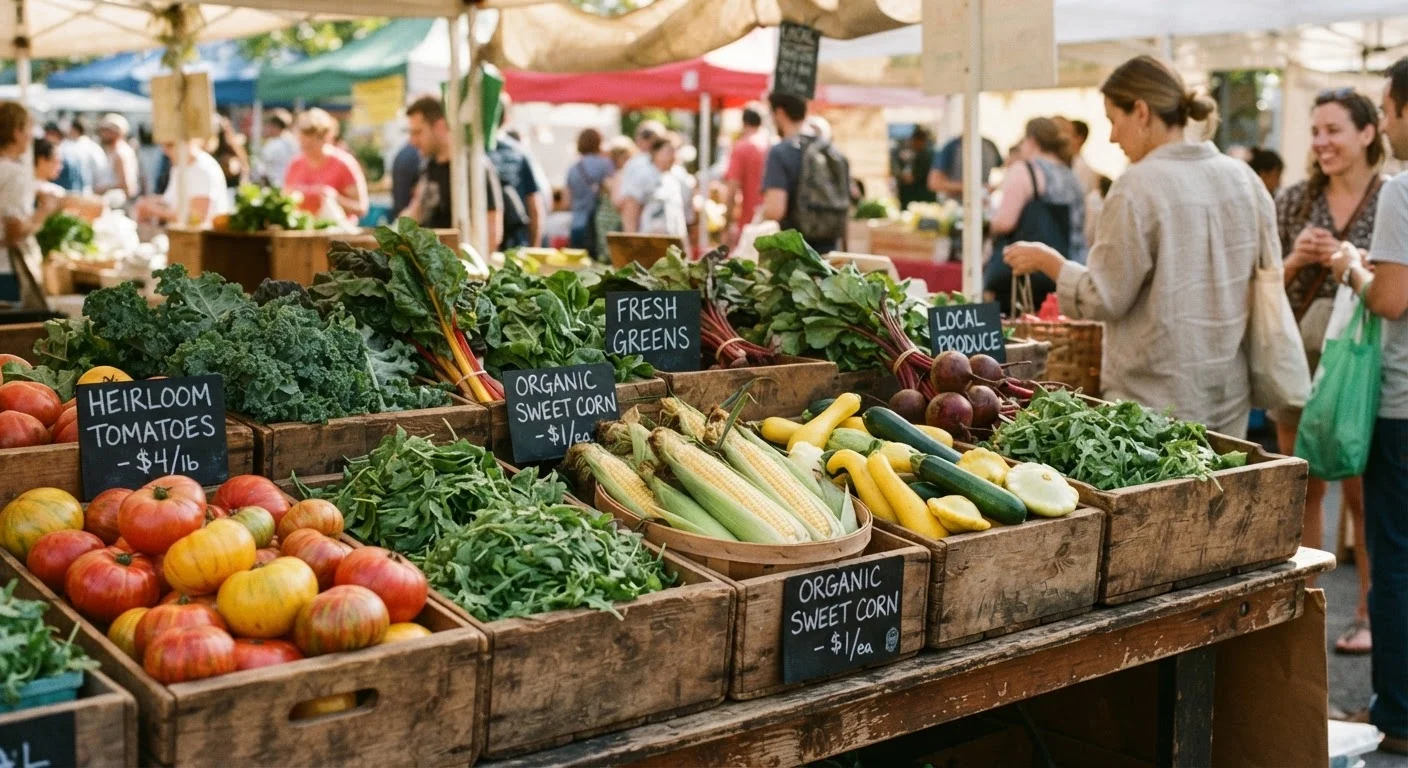
Photo credit: thetastyliving.com
In this article
Seasonal eating is often cited as a money-saver. Here is what it really means, how it works, and when it genuinely lowers your food costs.
Key Takeaways
- In-season produce typically costs less because local supply is high and shipping distance is short.
- The savings are real but uneven: some crops drop sharply in price at peak harvest; others barely change.
- Frozen and canned vegetables capture peak-season nutrition at off-season prices year-round.
- Seasonal eating requires matching your meal plan to what is currently cheap, not the other way around.
- Farmers markets are not always cheaper than grocery stores; compare prices before assuming any venue is the budget winner.
Why produce prices rise and fall through the year
Grocery prices for fresh produce are not set arbitrarily. They move with supply. When a crop hits peak harvest, fields produce more than usual, local warehouses fill quickly, and per-unit transport costs drop because the source is closer. Retailers pass some of that reduction to shoppers in the form of lower shelf prices.
The reverse happens in the off-season. Crops that cannot be grown locally must be shipped from other states or countries. Refrigeration, longer transit times, and lower overall volume push prices up. A pound of tomatoes in January often costs two to three times the August price in many parts of the country, though exact figures shift by year and region.
This supply-and-demand pattern is the foundation of seasonal eating as a budget strategy. It does not require any special shopping method. It requires buying more of what is currently cheap and building meals around that availability.
Use price as your in-season signal
You do not need a printed harvest calendar to eat seasonally. When a fresh vegetable or fruit drops noticeably in price at your regular grocery store, that is a reliable indicator that local supply is high. Track the per-pound price of a few staple items over several weeks and the pattern becomes clear on its own.
What seasonal eating actually requires you to do
Most budget advice presents seasonal eating as a simple swap: buy what is in season, spend less. The practical version is slightly more demanding. It means reversing the order in which most families plan meals.
The typical approach is to decide on recipes for the week, write a shopping list from those recipes, and then buy whatever the list says regardless of price. Seasonal eating flips that process. You check what is cheap and abundant first, then build meals around those ingredients.
For a busy household, that shift can feel disruptive. A workable middle path is to keep a rotating set of flexible recipe frameworks, such as stir-fries, grain bowls, soups, and sheet-pan dinners, that accept whatever vegetable is currently affordable. The structure of the meal stays consistent; the produce inside it changes with the season. This connects directly to the broader money-saving logic in why grocery bills stay high even with meal planning.
Prep work also matters. When you buy a large quantity of a seasonal item at low cost, processing it quickly prevents waste. Prep-focused cooking habits make it easier to handle bulk seasonal purchases without losing produce to the back of the refrigerator.
2x to 3x
Typical off-season vs. in-season price gap for peak crops
Price variation for highly seasonal crops like tomatoes and corn can be substantial, though the exact ratio shifts by year, region, and retailer.
30-40%
Estimated share of household food that goes to waste
The USDA has estimated that roughly 30 to 40 percent of the U.S. food supply is wasted, much of it at the consumer level due to spoilage.
When seasonal eating does not lower your costs
Seasonal eating has real limits that budget-focused shoppers should understand before restructuring their grocery habits around it.
First, not every crop shows meaningful price variation. Root vegetables like carrots and onions, and tropical imports like bananas and avocados, have relatively stable supply chains that buffer seasonal swings. Switching your shopping habits for those items will not produce noticeable savings.
Second, the shopping venue matters. A farmers market is not automatically cheaper than a supermarket. Some vendors price for convenience or premium quality. A per-pound comparison before buying is the only reliable test.
Third, seasonal produce requires prompt use. If a family buys a flat of in-season tomatoes but uses only half before spoilage, the savings evaporate. Waste is one of the most common reasons food budgets stay high despite seemingly smart choices. For appetizers and small dishes where produce is a featured ingredient, what actually drives appetizer costs down covers related strategies.
Frozen and canned vegetables solve the timing problem. Both are processed at peak harvest, which locks in nutritional value at a price that stays consistent year-round. For families who cannot reliably use fresh produce before it spoils, frozen is often the more practical budget tool. Nutrition research on whole foods and budget eating covers the evidence on how processed and whole-food formats compare.
A family in the Midwest notices zucchini and corn selling for noticeably less in late July. They build three dinners that week around those two vegetables: corn and black bean tacos, zucchini fritters, and a vegetable soup.
A shopper buys a large bag of fresh spinach at a reduced price during peak spring harvest, knowing she cannot use it all fresh within a few days.
A household compares the price of roma tomatoes at a nearby farmers market versus the supermarket during August peak harvest.
A simple framework for putting seasonal prices to work
A practical seasonal buying system does not need to be complicated. Three habits cover most of the opportunity.
- Check produce prices at the start of each week. Note items that are lower than their typical price. These are your volume buys for the week.
- Anchor at least two dinners to whichever vegetable is currently cheapest. Use flexible formats like soups and grain bowls that absorb different produce without requiring a new recipe each time.
- When price drops are large, buy extra and preserve: blanch and freeze vegetables, or store hardy items like winter squash in a cool, dry place for later use.
This approach does not require memorizing harvest calendars. Price is the signal. When supply is high, price drops. When price drops, that is the signal to buy more and cook around that ingredient.
Families who combine this habit with a broader weekly meal plan tend to see steadier savings than those who apply seasonal buying in isolation. See budget-friendly nutrition strategies for related approaches across different food categories.
Frequently Asked Questions

Author
Meal Planning Basics Editorial Team
Meal Planning Basics Editorial Team is the collective byline for our editorial team and contributor network. Articles published under this byline or an editorial pen name are researched, written, and reviewed according to our editorial standards for clarity, consistency, and independence before publication.
View all articles →