
Meal Planning From Scratch: A Family-Focused Framework
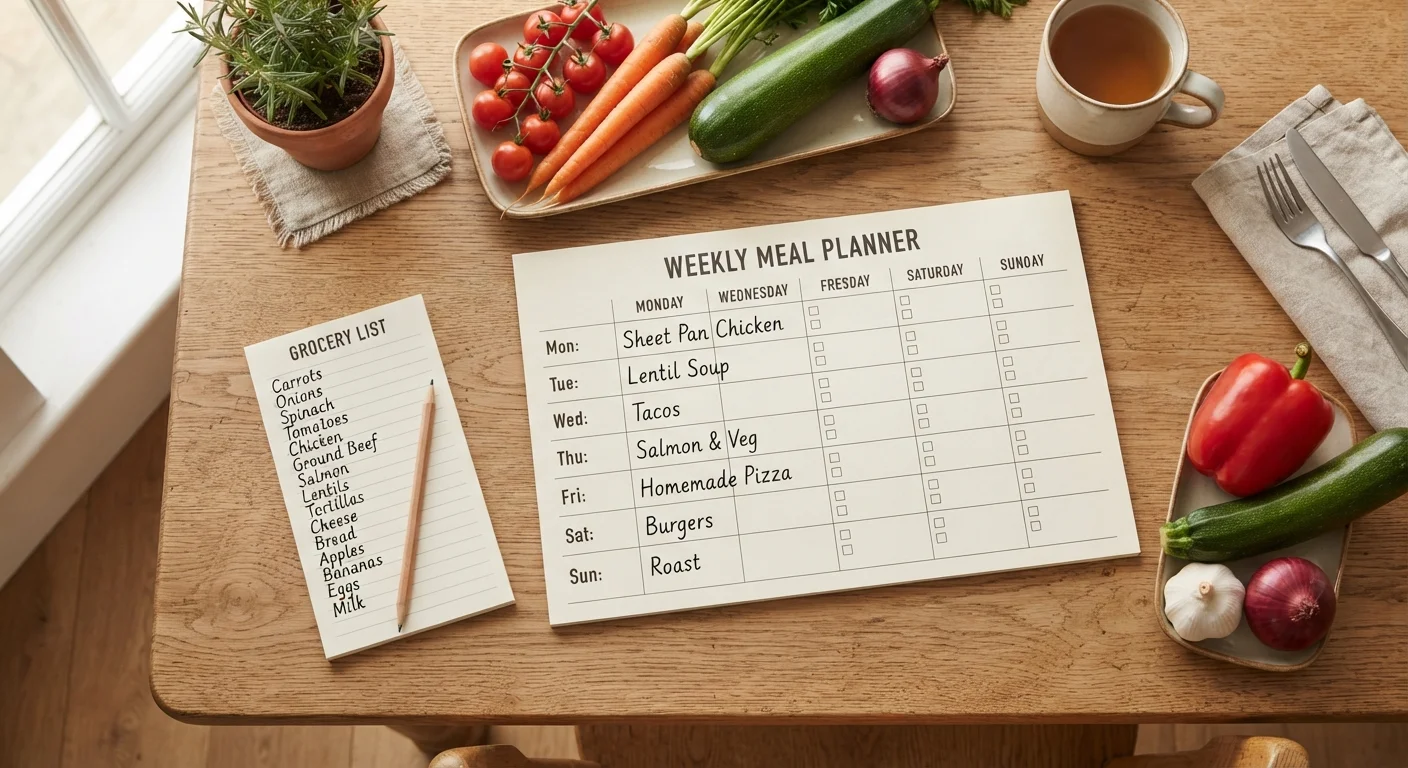
Photo credit: thetastyliving.com
In this article
New to meal planning? Learn a simple, repeatable weekly framework that helps busy families eat well and spend less at the grocery store.
Key Takeaways
- A repeatable weekly process is more useful than finding the perfect meal plan.
- Auditing your pantry before planning prevents duplicate purchases and reduces waste.
- Mapping meals by night type (simple, batch, leftovers) keeps planning manageable.
- A category-organized grocery list reduces impulse spending at the store.
- Consistency builds speed: most families cut planning time significantly after four weeks.
Why a framework matters more than a perfect plan
Many families skip meal planning because they picture a rigid schedule with elaborate recipes locked in for every night of the week. That image is discouraging, and it is also inaccurate. A workable framework is not about perfection; it is a short, repeatable process that keeps decisions manageable and grocery spending predictable.
Without any structure, most households make food choices reactively: buying items that look good in the store, ordering takeout when nothing obvious is in the fridge, and throwing away produce that was never used. A simple framework breaks that cycle by moving decisions to a calmer moment before the week begins.
If you have heard that meal planning takes hours or requires serious cooking skill, those assumptions are worth examining before you write off the practice. The framework below is designed for families with general cooking experience and limited time, not culinary professionals.
Start with dinners only
If the idea of planning every meal feels overwhelming, restrict your first few weeks to dinners alone. Breakfasts and lunches in most households follow natural patterns and rarely need a formal plan. Once the dinner routine feels automatic, you can add other meals if it is useful.
Step 1: Take stock before you plan
The first step happens before you choose a single recipe. Open the fridge, freezer, and pantry, and note what is already there. Proteins near their use-by date, half-used grains, and canned goods that have been sitting for months are all potential meals. Using them first cuts waste and lowers what you need to spend this week.
Write a short list: proteins on hand, starches and grains, canned or jarred items, and fresh produce with a limited shelf life. This audit takes about five minutes and directly shapes what goes on your meal map. Building meals around what you already have is one of the most reliable ways to reduce weekly grocery costs.
Meal map
A simple grid or list that assigns a meal category or specific dish to each night of the week before shopping begins.
Pantry audit
A quick inventory of what is already in your fridge, freezer, and pantry, done before planning so you use existing food first.
Batch cooking
Cooking a larger quantity of food in one session so the extra portions can be used for additional meals later in the week.
Leftover night
A planned slot in the weekly meal map where the family eats food cooked on a previous night, reducing both cooking time and waste.
Rotating meal list
A personal collection of tried-and-accepted recipes that a family cycles through regularly, making weekly planning faster.
Step 2: Build your weekly meal map
A meal map is a simple grid: seven nights, each assigned a category rather than a specific recipe. Categories might include a batch-cook night (cook extra portions to use later), a leftover night, a quick 20-minute dinner, and a slightly more involved weekend meal. Assigning categories first prevents the blank-page problem that stops most planning sessions before they start.
Once categories are in place, fill each slot with a specific meal drawn from your pantry audit and any gaps you plan to fill at the store. Aim for at least two nights where you deliberately cook more than you need so the extra portions carry into lunch or a later dinner. Batch cooking on one or two nights is a practical way to reduce both cooking time and spending across the week.
For a more detailed walkthrough of this process, the complete weekly meal plan guide covers recipe selection, portion sizing, and handling variations across family members.
Step 3: Write a focused grocery list
A grocery list written without categories tends to produce a disorganized shopping trip and missed items. Organize your list by section: produce, proteins, dairy, dry goods, and frozen. This matches most store layouts and reduces backtracking.
Cross-reference every item against your pantry audit before adding it. If your map calls for pasta and you already have two boxes, do not buy more. Only list what the week's meals actually require, plus any staples running low. Before you head to the store, the pre-shopping checklist can help you confirm nothing essential is missing from your list.
For families working to get more nutritional variety into their weekly dinners without significantly expanding the grocery list, planning balanced meals from a short list of whole-food staples is a useful approach to consider alongside your meal map.
Making the framework stick week after week
Consistency is what turns this from a one-time exercise into a habit that saves money reliably. Schedule a fixed 20-minute block each week, the same day and time, for your planning session. Many families find Sunday morning or Saturday after grocery shopping works well, but the specific time matters less than keeping it consistent.
Build a rotating list of 10 to 15 meals your family already accepts. Each week, pull from that list rather than searching for new recipes. Add one new meal every few weeks to prevent repetition without adding decision fatigue. Over time, the list grows and the planning session shortens.
If a fully fixed weekly menu feels too rigid for your household, a flexible planning approach lets you adapt to store sales and schedule changes without abandoning the framework entirely. The dinner and dessert ideas section can also help when you need affordable recipe inspiration to refresh your rotating list.
Frequently Asked Questions

Author
Meal Planning Basics Editorial Team
Meal Planning Basics Editorial Team is the collective byline for our editorial team and contributor network. Articles published under this byline or an editorial pen name are researched, written, and reviewed according to our editorial standards for clarity, consistency, and independence before publication.
View all articles →