
Stretching Your Grocery Dollar with Protein: Eggs, Legumes, and More
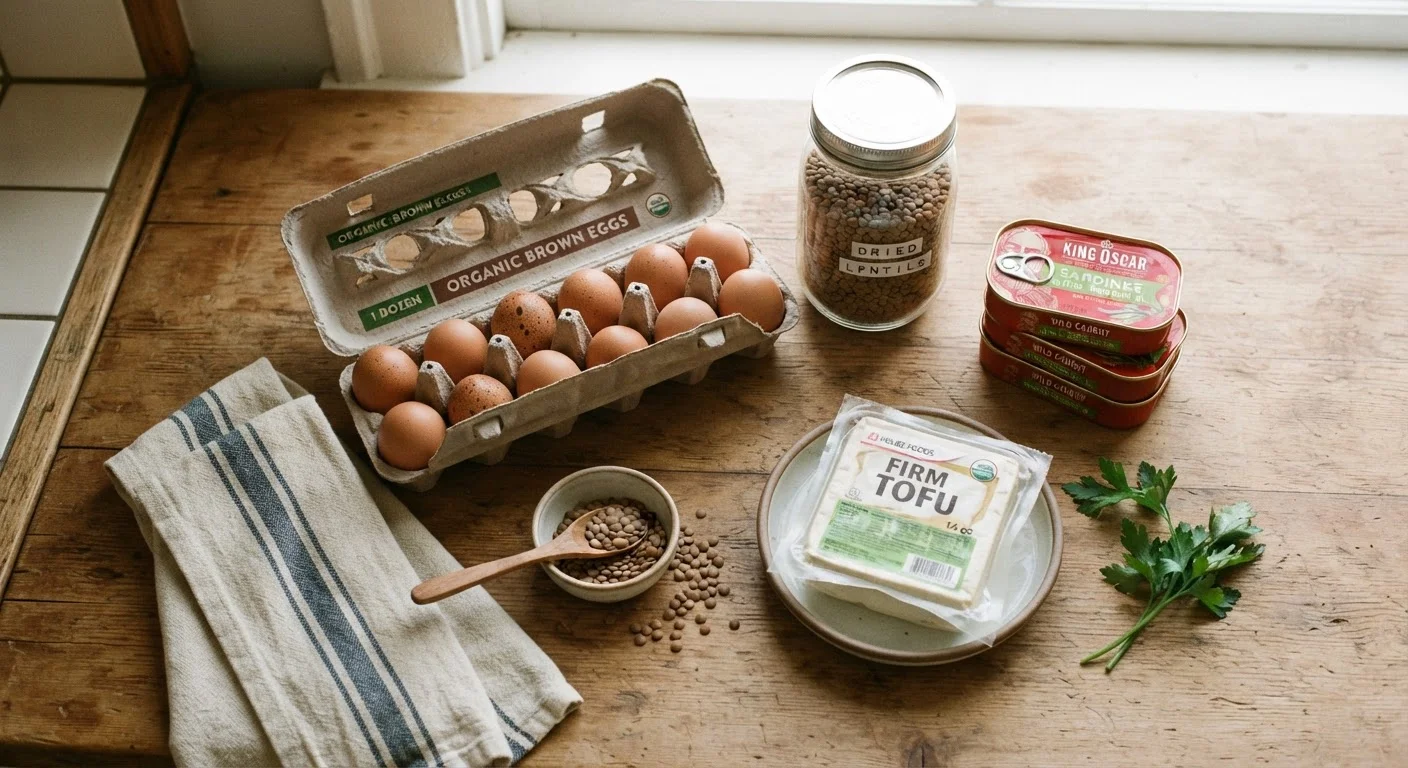
Photo credit: thetastyliving.com
In this article
A practical look at low-cost protein sources backed by nutrition evidence, including eggs, lentils, canned fish, and tofu.
Key Takeaways
- Eggs, lentils, canned fish, tofu, and dried beans deliver high protein per dollar compared to most meat cuts.
- Legumes also supply fiber and micronutrients, making them nutritionally dense beyond just their protein content.
- Combining plant proteins across meals covers all essential amino acids without requiring expensive supplements.
- Buying dried legumes instead of canned cuts costs further while retaining the same nutritional profile.
- Canned fish such as tuna and sardines are shelf-stable, quick to use, and rich in omega-3 fatty acids.
Why protein cost matters for family grocery budgets
Protein is often the most expensive line item in a grocery cart. For families watching every dollar, that cost adds up fast, especially when the default assumption is that adequate protein means buying chicken breasts, ground beef, or deli meat every week. The good news is that several whole foods deliver comparable or superior protein per serving at a fraction of the price.
This list focuses on foods with strong nutrition evidence behind them. Each one is widely available at US grocery stores, requires no specialty shopping, and fits into everyday cooking. For a broader look at how these foods fit into a full eating pattern, see what nutrition science says about affordable whole foods.
Protein quality matters alongside quantity. Animal proteins generally provide all nine essential amino acids in one source. Most plant proteins are lower in one or more essential amino acids, but eating a variety of legumes, grains, and vegetables across the day covers the full spectrum without any precise combining at each meal.
Eggs
A single large egg contains about 6 grams of complete protein along with choline, vitamin D, B12, and selenium. Per gram of protein, eggs are consistently among the least expensive options in any US grocery store, and they stay usable for several weeks when refrigerated properly.
Eggs are one of the few non-supplement sources of choline, a nutrient many Americans do not get enough of and one that supports brain and liver function. The protein in eggs is also highly bioavailable, meaning the body absorbs and uses it efficiently.
Per gram of protein, eggs are consistently among the least expensive options in any US grocery store.
Dried lentils
A one-pound bag of dried lentils typically costs under two dollars and yields roughly ten servings. Each cooked half-cup supplies around 9 grams of protein plus about 8 grams of fiber. Lentils also provide iron, folate, and potassium.
Unlike most dried beans, lentils require no soaking and cook in 20 to 30 minutes, making them practical for weeknight meals. Red lentils break down into a thick puree, useful for soups and dals. Green and brown lentils hold their shape and work well in salads and grain bowls. For a broader look at nutrient density in affordable foods, see nutrient density and budget eating.
A one-pound bag of dried lentils yields roughly ten servings at a cost well under two dollars.
Canned tuna and sardines
Canned tuna provides about 20 to 25 grams of protein per drained can, and sardines packed in water or olive oil deliver a similar amount along with calcium (from the soft, edible bones) and omega-3 fatty acids. Both are shelf-stable, require no cooking, and are available at virtually every US grocery store.
Sardines are particularly high in EPA and DHA, the omega-3 fats associated with cardiovascular and brain health. Because sardines are small and short-lived, they accumulate less mercury than larger fish, making them a reasonable choice for regular consumption. Pregnant individuals should follow current FDA and EPA guidance on fish intake rather than general recommendations.
Sardines are high in omega-3 fats and accumulate less mercury than larger fish due to their short life cycle.
Dried beans (black, pinto, kidney, chickpeas)
Dried beans cost significantly less per serving than canned beans and have an identical nutritional profile once cooked. A cooked half-cup of black beans provides about 7 to 8 grams of protein and 7 grams of fiber. Chickpeas, pinto beans, and kidney beans fall in a similar range.
Beans require soaking (usually 6 to 8 hours) and a longer cook time than lentils, but a large batch can be cooked once and stored in the refrigerator for up to five days or frozen in portions. This makes cost-effective batch cooking straightforward. Chickpeas in particular are flexible: they work in hummus, roasted as a snack, or added to soups and grain dishes. Try them in budget-friendly dips that feed a crowd.
Cooking dried beans from scratch cuts the cost per serving significantly compared to canned, with no loss in nutrition.
Tofu
A 14- to 16-ounce block of firm tofu provides roughly 30 to 35 grams of protein total and typically costs between one and three dollars depending on the store. Tofu is a complete protein, meaning it contains all nine essential amino acids, which is relatively rare among plant-based foods.
Calcium-set tofu also supplies meaningful amounts of calcium per serving, comparable to a small glass of milk. Pressing firm tofu before cooking removes excess moisture and allows it to brown and absorb marinades more effectively. Silken tofu has a softer texture and works in blended applications like smoothies or creamy sauces rather than sauteed dishes.
Tofu is one of the few plant-based complete proteins and costs well under three dollars per block at most stores.
Plain Greek yogurt
A standard 5.3-ounce container of plain Greek yogurt contains 15 to 17 grams of protein. Larger tubs cost less per ounce and are more economical for families using it regularly. Greek yogurt also provides calcium, B12, and live cultures (probiotics), though the health effects of probiotics in yogurt are still an area of ongoing research rather than settled consensus.
Plain varieties contain far less added sugar than flavored options and can serve as a sour cream substitute in cooking, a base for dips and dressings, or a protein addition to smoothies. Choosing plain yogurt and adding fresh or frozen fruit keeps sugar intake low without the cost premium of flavored products.
Buying plain Greek yogurt in larger tubs and adding your own fruit cuts cost and reduces added sugar intake.
Putting these proteins to work in real meals
Each food on this list is versatile enough to anchor multiple meals per week without repetition becoming a problem. Lentils work in soups, grain bowls, and tacos. Eggs go from breakfast scrambles to frittatas to fried rice. Canned tuna makes quick pasta, salads, and stuffed peppers. Tofu absorbs marinades and works in stir-fries, scrambles, and baked applications.
Make batch cooking work for protein
Cook a large pot of dried beans or lentils on the weekend and portion them into freezer bags. Each bag becomes a ready-to-use protein base for soups, grain bowls, or tacos on busy weeknights. Hard-boiled eggs also keep well in the refrigerator for up to one week, making them a fast grab-and-go protein option.
If you are building a weekly plan around these proteins, the balanced weekly meals walkthrough shows how a short grocery list can produce nutritionally varied dinners and lunches. For a reference organized by nutrient rather than meal, pantry staples organized by key nutrients covers how these foods slot into a complete nutritional picture.
Families with members who have specific health conditions, are pregnant, or are managing chronic illness should consult a registered dietitian before making significant changes to protein intake or food choices. This article is general nutrition information, not personal medical advice.
This article is for informational purposes only and is not a substitute for professional medical or dietary advice. Consult a qualified healthcare provider for guidance specific to your health needs.

Author
Nutrition Editorial Team
Nutrition Editorial Team is the collective byline for our editorial team and contributor network. Articles published under this byline or an editorial pen name are researched, written, and reviewed according to our editorial standards for clarity, consistency, and independence before publication.
View all articles →