
When Canned, Frozen, and Fresh Vegetables Actually Differ in the Kitchen
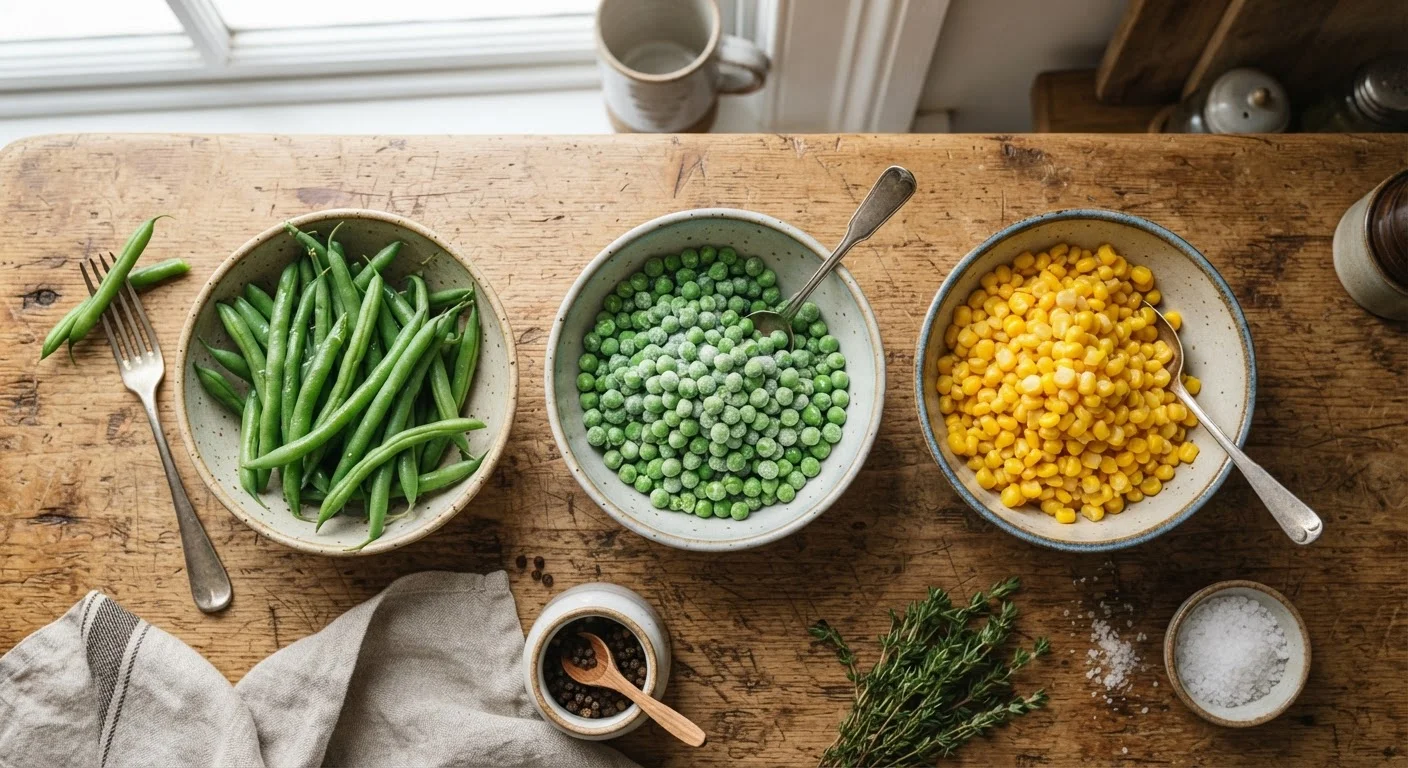
Photo credit: thetastyliving.com
In this article
Texture, flavor, nutrition, and cost vary across vegetable forms. Understand when each works best so you always buy the right one for the recipe.
Key Takeaways
- Frozen vegetables are often nutritionally comparable to fresh because they are processed quickly after harvest.
- Canned vegetables work well in cooked dishes but typically carry more sodium and softer texture.
- Fresh vegetables are best when texture, raw use, or appearance in the final dish matters most.
- Cost per serving varies by season and form, so keeping all three on hand reduces grocery spending.
- Matching the vegetable form to the cooking method is the most practical way to get good results.
How each form is processed before it reaches your kitchen
Understanding what happens between harvest and your pot helps explain why canned, frozen, and fresh vegetables behave so differently.
Fresh vegetables are picked and transported with minimal processing. Transit and storage time, sometimes days or weeks for produce shipped across the country, causes gradual nutrient loss and texture change. A tomato picked underripe to survive shipping has different flavor and cell structure than one picked ripe from a local farm.
Frozen vegetables are typically blanched (briefly heated in water or steam) within hours of harvest, then quickly frozen. Blanching stops enzyme activity that would degrade quality, and the fast freeze locks in nutrients. Frozen vegetables often retain their nutrient content at levels comparable to fresh, a fact that surprises many home cooks.
Canned vegetables are cooked at high heat inside the sealed can to ensure food safety. That process softens cell walls significantly and causes some water-soluble vitamins, particularly vitamin C and B vitamins, to leach into the surrounding liquid. Sodium is added to most commercially canned vegetables as a preservative and flavor agent.
Texture and flavor differences that affect cooking outcomes
Texture is the area where these three forms diverge most clearly, and it directly determines which recipes work.
Fresh vegetables hold their structure during most cooking methods. Stir-frying, roasting, and quick sautes all reward firm cell walls. A fresh bell pepper sauteed for two minutes stays crisp-tender. The same pepper from a can turns mushy because its cells are already softened from the canning process.
Frozen vegetables sit in the middle. Blanching slightly softens them, but the ice crystals formed during freezing also rupture some cell walls. This means frozen broccoli roasted in a hot oven will never be as crisp as fresh broccoli, but it works well steamed, added to soups, or folded into casseroles where some softness is acceptable.
Canned vegetables are already fully cooked. Their use case is dishes with long cook times where added softening is either unnoticed or welcome. Canned tomatoes are one of the best examples: heat intensifies their flavor and the soft texture integrates into sauces rather than fighting the dish. Canned corn in a chili, canned artichoke hearts in a dip, canned pumpkin in a pie all succeed because texture expectations are already low or irrelevant.
| Fresh | Frozen | Canned | |
|---|---|---|---|
| Texture after cooking | Firm, holds structure best | Slightly soft, works in most dishes | Soft, best in long-cooked recipes |
| Nutrient retention | Good when very fresh | Comparable to fresh or better | Lower for water-soluble vitamins |
| Sodium content | Naturally low | Low (check labels) | Often high; rinsing helps |
| Shelf life | Days to 2 weeks | Several months to 1 year | 1 to 5 years |
| Typical cost | Lowest in season, high off-season | Consistent year-round value | Consistent, very low per serving |
| Best cooking uses | Raw, stir-fry, roast, saute | Steam, soups, casseroles, sides | Soups, stews, sauces, dips |
Nutrition: what the evidence shows
A persistent myth holds that only fresh vegetables are nutritious. The actual picture is more useful than that.
Frozen vegetables perform well nutritionally. Research published through the University of California Davis found that frozen produce can match or exceed fresh in several vitamins, particularly when the fresh option has been stored for multiple days. The key factor is time between harvest and processing: the faster the freeze, the more nutrients are preserved.
Canned vegetables lose more water-soluble vitamins during the high-heat process, but fat-soluble nutrients like vitamin A and lycopene (found in tomatoes) survive well. Canned tomatoes are one of the few cases where processing may actually increase the availability of a nutrient: cooking breaks down cell walls and makes lycopene easier for the body to absorb. For a broader look at eating nutritiously without overspending, what nutrition science says about whole foods on a budget is worth reading alongside this.
Sodium is the main nutritional concern with canned vegetables. A half-cup serving of regular canned green beans can contain 300 to 400 milligrams of sodium. Rinsing canned vegetables under cold water for 30 seconds removes a meaningful portion of surface sodium, a simple step that most recipes do not require you to skip.
Cost and pantry value across the year
Vegetable prices shift with seasons and supply chains, so comparing cost is not a simple ranking.
Fresh vegetables cost the least when they are in season locally. Out-of-season fresh produce, especially anything shipped from a distant region in winter, often costs more per serving than frozen or canned alternatives. A bag of frozen spinach in January is almost always cheaper per cup than fresh spinach flown from a warmer climate.
Canned vegetables carry a consistent price year-round and have shelf lives measured in years, which reduces food waste. For families who struggle to use fresh produce before it spoils, the effective cost of fresh is often higher than the sticker price once thrown-away food is counted. What seasonal eating actually means for your grocery budget breaks down how timing your fresh purchases cuts spending.
Frozen vegetables typically offer the best consistent value across most of the year. A 12-ounce bag of frozen peas costs less per serving than fresh peas outside peak season and keeps for months without quality loss.
A practical approach for most households is to keep a frozen vegetable rotation as the default, buy fresh when something is clearly in season and priced well, and rely on canned for pantry meals and long-simmered dishes. This pattern stretches the grocery budget without creating trade-offs in meal quality.

Author
Kitchen Tips & Tricks Editorial Team
Kitchen Tips & Tricks Editorial Team is the collective byline for our editorial team and contributor network. Articles published under this byline or an editorial pen name are researched, written, and reviewed according to our editorial standards for clarity, consistency, and independence before publication.
View all articles →