
The Real Nutritional Value of Frozen Vegetables
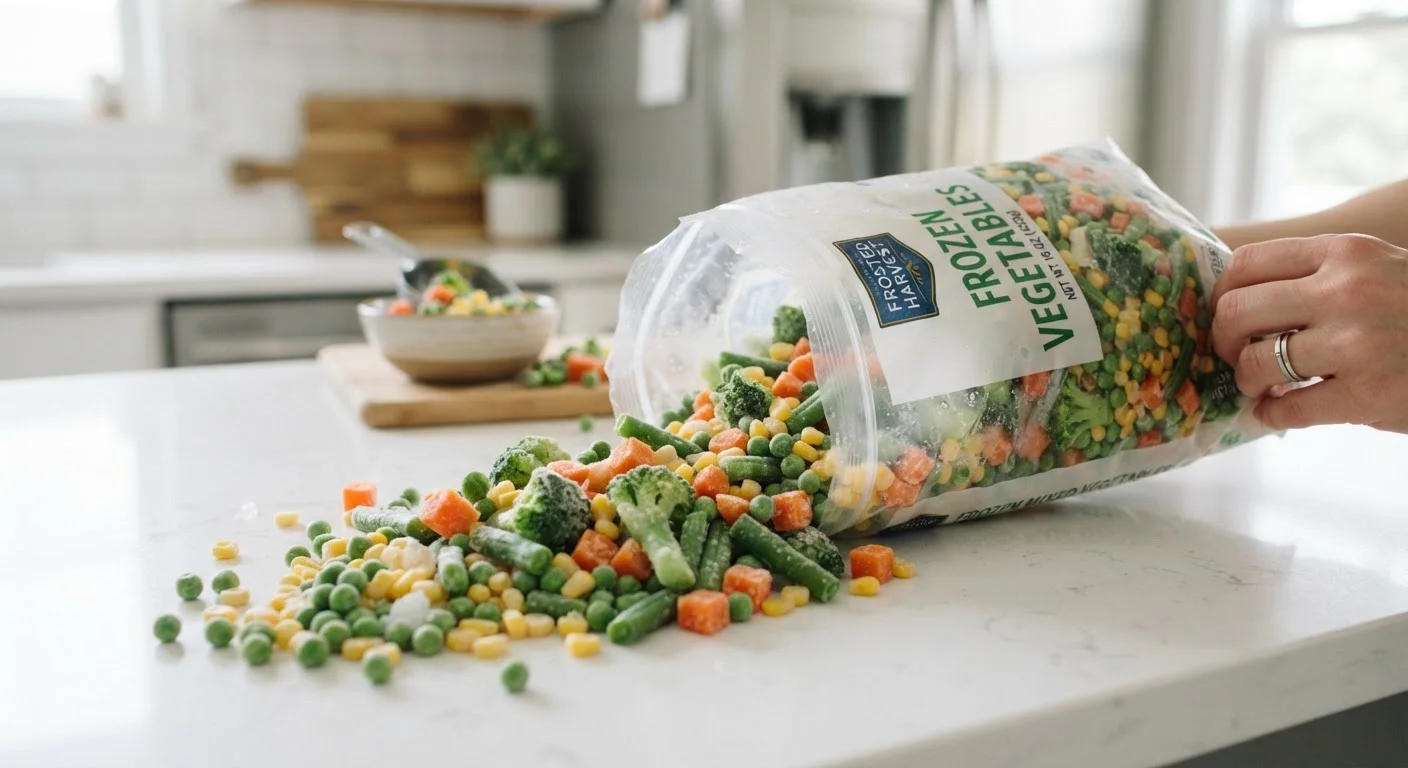
Photo credit: thetastyliving.com
In this article
Frozen vegetables are often misunderstood. Learn how their nutrient content compares to fresh and why they deserve a place in a healthy diet.
Key Takeaways
- Frozen vegetables are often just as nutritious as fresh ones, and sometimes more so.
- The blanching process used before freezing causes minor nutrient loss, but freezing itself preserves most vitamins.
- Frozen vegetables cost less per serving than fresh, making them a strong choice for budget-conscious families.
- Cooking method matters more than whether a vegetable is fresh or frozen for retaining nutrients.
- A mix of frozen and fresh vegetables in your weekly meals is a practical, well-supported approach.
Why frozen vegetables get an unfair reputation
Many families assume that frozen vegetables are a nutritional step down from fresh ones. The reasoning feels intuitive: fresh must mean better. But the actual path from farm to table complicates that picture significantly.
Fresh vegetables sold in typical grocery stores may sit in transit for several days before reaching the produce aisle, then spend additional days on the shelf and in your refrigerator. During that time, heat, light, and air degrade water-soluble vitamins like vitamin C and several B vitamins. A bag of frozen broccoli, by contrast, was likely blanched and frozen within hours of harvest, which stops that degradation almost immediately.
That timing difference is worth understanding because it shifts the comparison. The question is not which category is always superior, but rather which one best preserves nutrition given the conditions each travels through. See how this plays out in actual cooking contexts in our guide to when canned, frozen, and fresh vegetables differ.
Common myths about frozen vegetables, corrected
Several persistent beliefs about frozen vegetables discourage families from using them regularly. The myth-and-fact breakdown below addresses the most common ones with evidence-based corrections.
Myth
Frozen vegetables are processed foods and therefore unhealthy.
Fact
Freezing is a preservation method, not a formulation process. Plain frozen vegetables contain no additives and are nutritionally comparable to their fresh equivalents.
The word 'processed' covers a broad range, from lightly handled foods like frozen peas to heavily formulated products with added sodium, sugar, and fat. Plain frozen vegetables fall into the first category. The only steps involved are washing, blanching (a brief heat treatment), and rapid freezing. No preservatives, fillers, or sodium are added to plain frozen vegetables. When shopping, check the ingredient list: it should name only the vegetable itself.
Myth
Blanching before freezing destroys most of the vegetable's vitamins.
Fact
Blanching causes modest losses in some heat-sensitive vitamins, but the rapid freezing that follows stops further degradation for months.
Blanching does reduce some vitamin C and certain B vitamins, with losses varying by vegetable, blanching time, and water temperature. Research published in journals covering food science has found these losses are generally in a modest range, often smaller than what occurs during the days of transit and refrigerator storage that fresh produce undergoes. Once a vegetable is frozen, nutrient loss slows dramatically. The overall nutrient profile of a frozen vegetable at the time you cook it is often close to, and in some cases better than, a fresh vegetable that has been stored for several days.
Myth
Fresh vegetables from the grocery store are always more nutritious than frozen ones.
Fact
Fresh vegetables harvested recently and eaten the same day are nutritionally excellent, but most grocery store fresh produce has lost measurable nutrients during transit and storage.
The nutrient gap between fresh and frozen depends heavily on how long fresh produce was in transit and how long it sat before you ate it. Studies comparing retail fresh vegetables to frozen equivalents have found that in some cases, frozen retained higher levels of certain vitamins. Locally grown produce purchased directly from farmers and consumed quickly can genuinely outperform frozen, but that is not the comparison most families face at the average grocery store. For most households, frozen vegetables are a nutritionally sound and reliable option.
Myth
Frozen vegetables taste so different from fresh that families will not eat them.
Fact
Texture changes after freezing are real but manageable, and many cooking methods minimize the difference in ways that most family members accept easily.
Freezing causes water inside vegetable cells to expand, which softens cell walls and changes texture after thawing. This matters more for some vegetables (cucumbers, raw salad greens) than others (peas, corn, broccoli, green beans). Frozen vegetables work well in cooked applications: stir-fries, soups, casseroles, pasta dishes, and sheet-pan meals where a slight softening is unnoticeable. Families who find one frozen vegetable unappealing often discover others that work better in their regular recipes. The flavor of frozen vegetables picked at peak ripeness is frequently better than out-of-season fresh produce that was harvested early for transport.
Myth
You should avoid frozen vegetables with added sauces because all frozen vegetables have additives.
Fact
Plain frozen vegetables contain no added ingredients. Sauce-added varieties do contain sodium and other additives, and the two products are clearly distinct on store shelves.
Frozen vegetables come in two clearly different forms. Plain frozen vegetables list only the vegetable in the ingredients. Sauce-added or seasoned varieties include butter, cream sauces, salt, or flavorings that change the sodium and calorie content significantly. Reading the ingredient label takes only a few seconds and reliably distinguishes the two. For families managing sodium intake, plain frozen vegetables are a straightforward, low-sodium option. Adding your own seasoning at home also gives you full control over the final flavor and nutrition profile.
How to get the most nutrition out of frozen vegetables
The way you cook frozen vegetables affects nutrient retention more than the freezing process itself. Boiling vegetables in large amounts of water leaches water-soluble vitamins into the cooking liquid, which most people discard. Steaming, microwaving with minimal water, or roasting from frozen preserves more of those nutrients.
Frozen vegetables also make weeknight cooking faster and reduce food waste, since you can pour out exactly what you need and return the rest to the freezer. That convenience directly supports consistent vegetable intake, which matters more nutritionally than optimizing one specific meal.
For families tracking grocery spending, the per-serving cost of frozen vegetables is typically lower than fresh, and the shelf life difference is significant. A bag of frozen peas lasts months without quality loss, while fresh peas may deteriorate within days. Nutrient density is a useful concept here: you are looking for the most nutrition per dollar, and frozen vegetables score well on that measure. Our article on whole foods on a budget covers this framework in more detail.
For context on broader freezer strategy, a family guide to smart freezing explains how to organize and rotate frozen foods to minimize waste and stretch a grocery budget further.
This article is for informational purposes only and is not medical advice. Consult a qualified healthcare professional for personalized dietary guidance.

Author
Nutrition Editorial Team
Nutrition Editorial Team is the collective byline for our editorial team and contributor network. Articles published under this byline or an editorial pen name are researched, written, and reviewed according to our editorial standards for clarity, consistency, and independence before publication.
View all articles →