
When Appetizers Backfire: Portion and Prep Mistakes That Waste Money
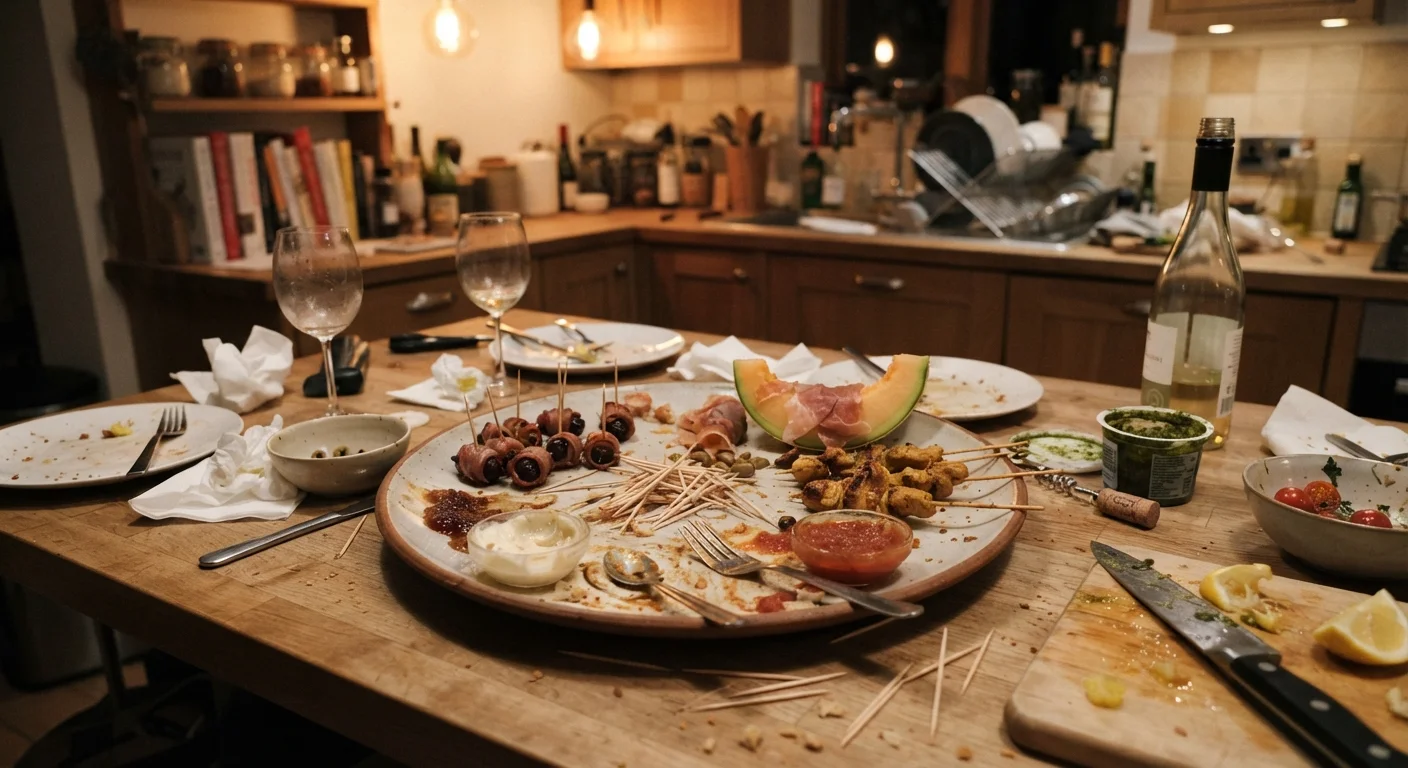
Photo credit: thetastyliving.com
In this article
Over-buying ingredients, under-portioning servings, and skipping prep steps are the quiet budget killers of any appetizer spread. Here is what to watch for.
Key Takeaways
- Buying ingredients without a per-person portion estimate almost always leads to expensive waste.
- Skipping prep steps like mise en place causes rushed decisions and costly last-minute substitutions.
- Over-ambitious variety in appetizer spreads drives up costs without improving guest satisfaction.
- Choosing perishable garnishes and delicate ingredients for large groups rarely pays off budget-wise.
- Knowing your guest count and appetite level before shopping is the single most effective cost control.
Where the money actually disappears
Appetizer waste tends to be invisible in the moment. Guests fill plates, conversations start, and by the end of the night there is a mountain of untouched food that no one is sure how to save. The budget hit rarely comes from one dramatic mistake. It accumulates across small decisions made before anyone even walks in the door.
Three factors consistently drive unnecessary cost: buying without a quantity estimate, choosing menus with too many items, and skipping prep steps that would keep food usable for the full event. Each one is fixable with a little planning, and fixing them together can cut a party food budget noticeably. For a broader look at planning appetizer spreads from scratch, the appetizer planning guide covers portion sizing and ingredient selection in detail.
Portion math matters before you shop
For appetizer-only spreads, a general estimate is 6 to 8 pieces per guest per hour. For appetizers before a full meal, 3 to 4 pieces per guest is usually enough. Buying ingredients without these numbers in mind is the fastest way to overspend. Run your estimates before you write a shopping list, not after.
The most common mistakes and how to stop making them
Buying ingredients without a firm guest count or portion estimate.
Why it happens: Most home cooks default to buying 'enough to be safe,' which in practice means buying significantly more than guests will eat.
Offering too many different appetizers for the size of the group.
Why it happens: Variety feels generous, but each additional recipe requires its own ingredient purchase, often for amounts far larger than a single recipe needs.
Skipping prep work and assembling appetizers at the last minute.
Why it happens: Underestimating assembly time leads to rushed execution, which causes broken crackers, sloppy portions, and wasted food that gets discarded rather than served.
Choosing recipes with high-cost perishable ingredients that cannot be repurposed.
Why it happens: Recipes that call for specialty items (smoked salmon, fresh crab, prosciutto) in small quantities force you to buy more than the recipe uses, with little chance to use the rest before it spoils.
Setting out all the food at once for a long event.
Why it happens: Putting everything out immediately seems hospitable, but appetizers sitting at room temperature for two or more hours lose texture and become less appealing, leading to more waste.
One pattern worth addressing separately is the instinct to build variety into every spread. Offering six different appetizers for a gathering of ten feels generous, but it almost guarantees that some recipes will be barely touched. Two or three well-chosen recipes that share ingredients will satisfy guests just as well and leave far less waste. See what actually makes an appetizer affordable for guidance on which recipes give you the most value per dollar spent.
Perishable garnishes can double ingredient costs
Fresh herbs, edible flowers, and delicate microgreens wilt quickly at room temperature and often go uneaten at buffet-style parties. These items typically carry a high per-ounce cost relative to the flavor they add. Reserve them for plated presentations where each piece gets individual attention, or swap in dried herbs and thinly sliced scallions instead.
Practical ways to keep costs in check
30-40%
Food wasted at average American gatherings
The USDA estimates that American households waste roughly 30 to 40 percent of the food supply, a pattern that holds at social gatherings where over-catering is common.
6-8
Appetizer pieces per guest per hour
This is a widely cited catering industry estimate for appetizer-only events, useful as a baseline when calculating ingredient quantities.
Sheet pan recipes are one of the more practical formats for budget-conscious appetizer spreads because a single pan can produce a large quantity of one item with minimal prep time and almost no waste. Sheet pan appetizers also tend to use whole vegetables and simple proteins that leave little leftover.
When leftovers do happen, how you handle them determines whether the food costs stop at the event or continue into the next day. Reheating appetizers properly is a skill worth having, since most finger foods can survive a second appearance if they are stored and warmed correctly. Pair that habit with a pantry stocked with versatile staple ingredients and the cost per gathering drops over time without any sacrifice in quality.

Author
Appetizers Editorial Team
Appetizers Editorial Team is the collective byline for our editorial team and contributor network. Articles published under this byline or an editorial pen name are researched, written, and reviewed according to our editorial standards for clarity, consistency, and independence before publication.
View all articles →