
Sheet Pan Dinners: What Makes Them Work and When They Fall Short
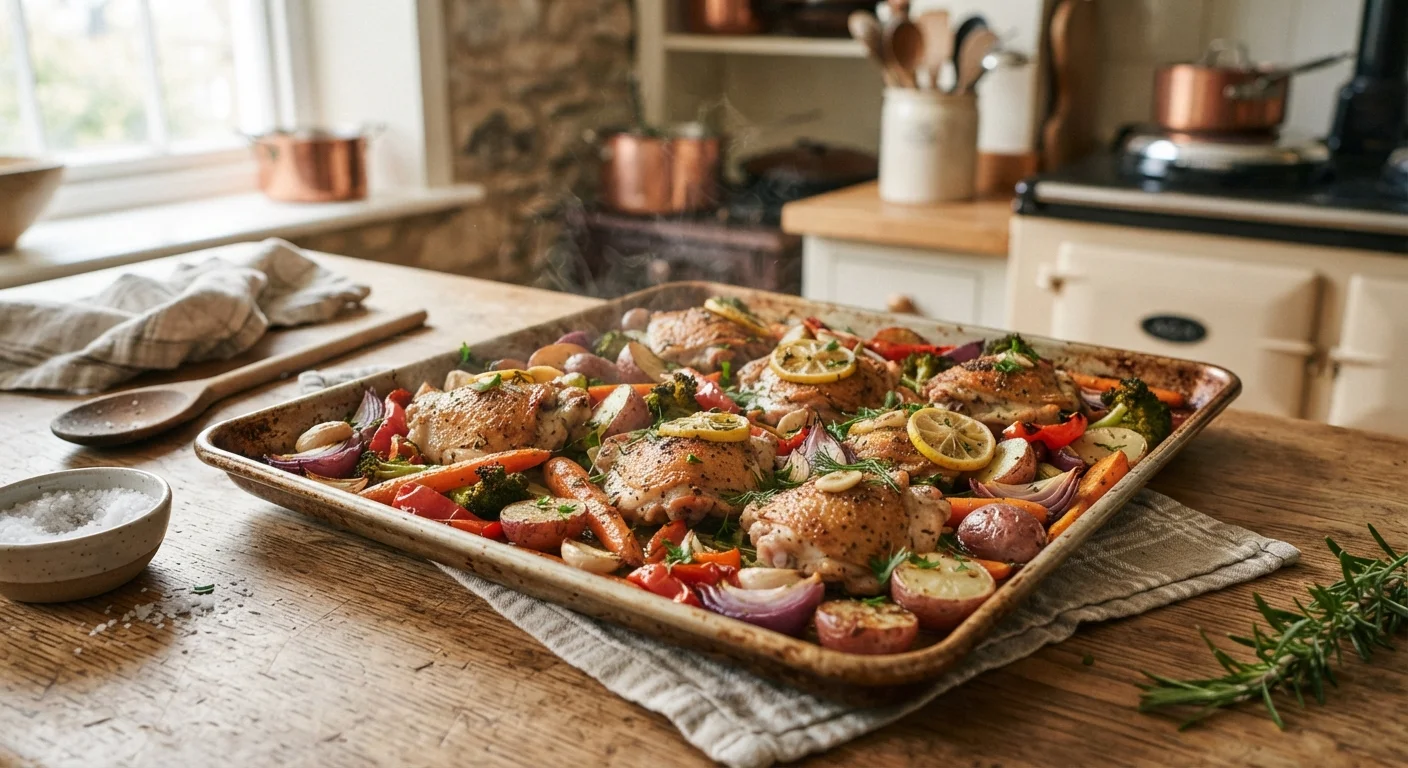
Photo credit: thetastyliving.com
In this article
Sheet pan meals promise easy cleanup and hands-off cooking. Here's an honest look at where they shine and where they can let you down.
Key Takeaways
- Sheet pan dinners work best when ingredients share similar roasting times and moisture levels.
- The method cuts active cooking time and cleanup, making it practical for weeknights.
- Overcrowding the pan is the most common reason sheet pan meals disappoint.
- Some proteins and vegetables need different temperatures, which one pan cannot always deliver.
- Budget-friendly proteins like chicken thighs and root vegetables perform well on a sheet pan.
Minimal active cooking time on weeknights
Once ingredients are on the pan and in the oven, there is little to do until the timer goes off. That hands-off window is genuinely useful when other tasks compete for attention.
Cleanup is close to a single pan
Lining the pan with foil or parchment reduces scrubbing to almost nothing. Families with limited time or dishwasher capacity find this a practical advantage.
Works with low-cost proteins and vegetables
Chicken thighs, drumsticks, canned chickpeas, and inexpensive root vegetables all perform well. The method does not require premium cuts to produce good results.
Easy to scale up for larger families
Using two sheet pans in the same oven doubles the output without doubling the work. Positioning matters (rotate pans halfway through), but the effort remains low.
Dry oven heat builds flavor through browning
Roasting caramelizes natural sugars in vegetables and creates a browned crust on proteins. Both effects add depth without added sauces or fats.
Overcrowding ruins the texture of everything
Ingredients packed too tightly trap steam and end up soft rather than roasted. A standard half-sheet pan holds enough for two to three people comfortably, not four to six.
Not all proteins and vegetables share a roasting temperature
Delicate fish, tender greens, and thick root vegetables have genuinely different heat needs. Combining them on one pan at one temperature produces an uneven result.
High-moisture vegetables undermine browning
Zucchini, mushrooms, and tomatoes release significant water as they cook. That moisture steams other ingredients on the pan and prevents the caramelization that makes roasted food appealing.
Limited to certain cuisine styles
Dishes that depend on sauces built in a skillet, on braising liquid, or on stovetop technique do not translate to a sheet pan. The method suits Mediterranean and American weeknight cooking more than it suits many Asian or Latin preparations.
What sheet pan cooking actually involves
A sheet pan dinner puts protein and vegetables on a single rimmed baking sheet, seasons everything, and lets oven heat do most of the work. The appeal is straightforward: fewer pots, less monitoring, and a predictable result once you know your oven. For families trying to cut grocery costs, the method also encourages using cheaper cuts and whatever vegetables are on hand.
The mechanics behind the method come down to dry, high heat transforming ingredients through roasting rather than steaming or braising. That distinction matters because the method has real limits alongside its strengths.
Where sheet pan dinners deliver
Minimal active cooking time on weeknights
Once ingredients are on the pan and in the oven, there is little to do until the timer goes off. That hands-off window is genuinely useful when other tasks compete for attention.
Cleanup is close to a single pan
Lining the pan with foil or parchment reduces scrubbing to almost nothing. Families with limited time or dishwasher capacity find this a practical advantage.
Works with low-cost proteins and vegetables
Chicken thighs, drumsticks, canned chickpeas, and inexpensive root vegetables all perform well. The method does not require premium cuts to produce good results.
Easy to scale up for larger families
Using two sheet pans in the same oven doubles the output without doubling the work. Positioning matters (rotate pans halfway through), but the effort remains low.
Dry oven heat builds flavor through browning
Roasting caramelizes natural sugars in vegetables and creates a browned crust on proteins. Both effects add depth without added sauces or fats.
Chicken thighs are a reliable starting point. They tolerate high heat, release fat that bastes surrounding vegetables, and cost considerably less per pound than breasts. Avoiding a few common prep errors is about all it takes to get a consistently good result. Root vegetables, broccoli, and sturdy greens like kale also hold up well and benefit from the same 400-425 F range most thighs need.
The same logic that makes sheet pans work for dinner applies to snacking. Sheet pan appetizers follow identical rules and cost less per serving than most stovetop alternatives.
400-425 F
Typical roasting range for sheet pan dinners
Most bone-in chicken pieces and dense root vegetables reach proper doneness within this temperature band, making them natural pairing candidates.
18x13 in
Standard half-sheet pan size
A half-sheet pan is the most common home option; fitting more than about 2 pounds of mixed ingredients on one without overcrowding becomes difficult.
Where sheet pan dinners fall short
Overcrowding ruins the texture of everything
Ingredients packed too tightly trap steam and end up soft rather than roasted. A standard half-sheet pan holds enough for two to three people comfortably, not four to six.
Not all proteins and vegetables share a roasting temperature
Delicate fish, tender greens, and thick root vegetables have genuinely different heat needs. Combining them on one pan at one temperature produces an uneven result.
High-moisture vegetables undermine browning
Zucchini, mushrooms, and tomatoes release significant water as they cook. That moisture steams other ingredients on the pan and prevents the caramelization that makes roasted food appealing.
Limited to certain cuisine styles
Dishes that depend on sauces built in a skillet, on braising liquid, or on stovetop technique do not translate to a sheet pan. The method suits Mediterranean and American weeknight cooking more than it suits many Asian or Latin preparations.
The most common failure is moisture. Vegetables that release a lot of water (zucchini, mushrooms, cherry tomatoes) create steam underneath the protein, which prevents browning on anything touching the pan. Spacing and pan size matter more than most recipes acknowledge.
Temperature mismatch is the other common problem. A piece of salmon finishes at 375 F long before thick-cut potatoes are tender. Cooking them together means either undercooked starch or overcooked fish. Some cooks solve this by staggering start times, though that adds the kind of active monitoring the method is supposed to eliminate.
Staggering cook times adds steps but fixes temperature conflicts
If a recipe pairs a slow-cooking ingredient with a fast-cooking one, starting the slower item 10 to 15 minutes earlier is a workable fix. Add the faster ingredient partway through the total cook time. This does require you to stay near the kitchen, which reduces the hands-off benefit somewhat. For true set-and-forget convenience, choose ingredients with matching cook times from the start.
Making it work within a grocery budget
The method pairs well with pantry-based meal planning. Canned beans, dried lentils, and frozen vegetables can round out a sheet pan meal without a separate grocery trip. Frozen broccoli florets roast well if spread in a single layer and not overcrowded; the same is true for frozen shrimp once thawed and patted dry.
Matching sheet pan meals to a weekly meal plan also reduces waste. If you roast a full sheet of root vegetables on Sunday, the leftovers become a side on Tuesday without much additional work. Reheating roasted vegetables properly means a quick pass in a hot oven rather than the microwave, which restores some crispness.
One practical rule: plan your protein first, find its ideal temperature, then choose vegetables that roast at the same heat. That single habit removes most of the frustration people associate with the method.

Author
Dinner & Dessert Editorial Team
Dinner & Dessert Editorial Team is the collective byline for our editorial team and contributor network. Articles published under this byline or an editorial pen name are researched, written, and reviewed according to our editorial standards for clarity, consistency, and independence before publication.
View all articles →