
Why Dried Beans Beat Canned Beans on a Tight Budget
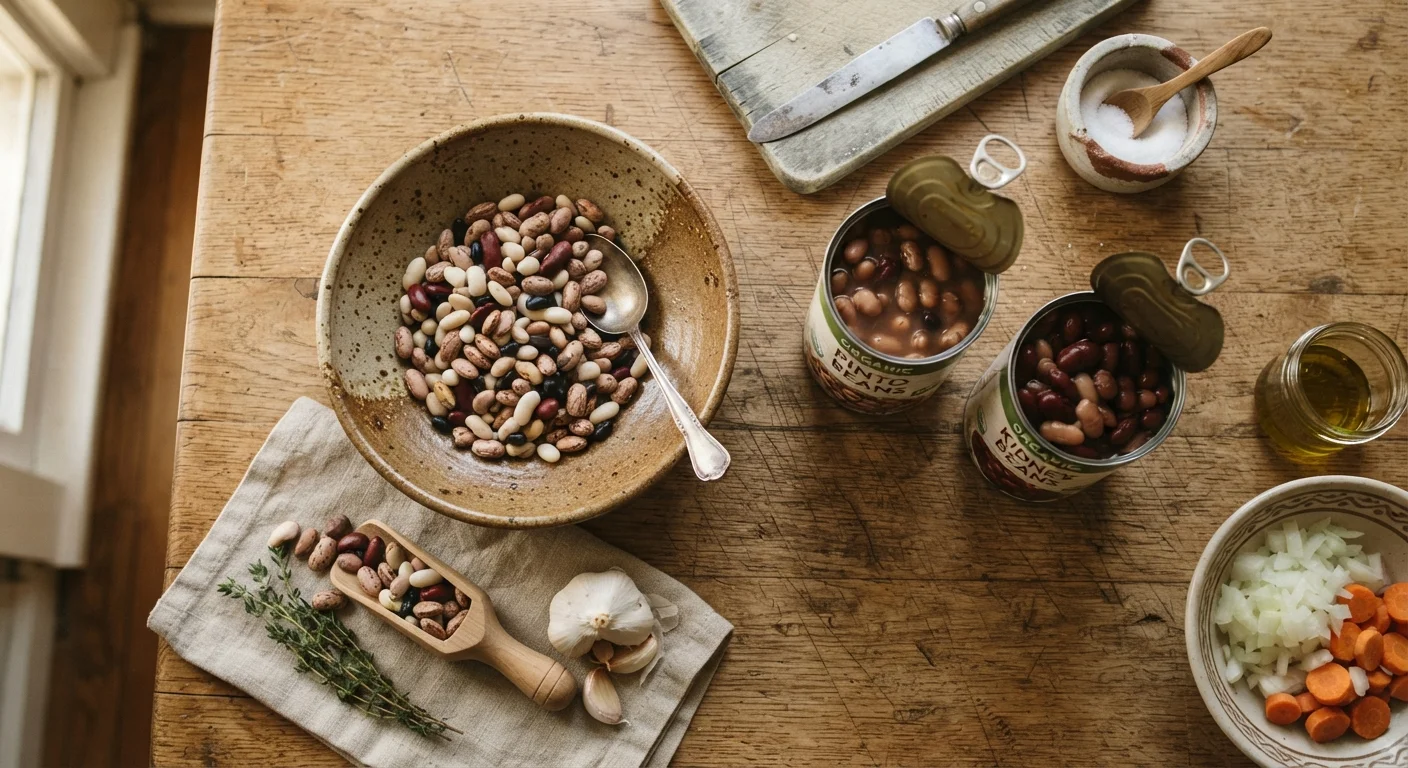
Photo credit: thetastyliving.com
In this article
Dried and canned beans both have a place in a frugal kitchen. Understand the real cost, time, and flavor differences before you shop.
Key Takeaways
- Dried beans cost significantly less per serving than canned beans at most grocery stores.
- Canned beans require no soaking or long cooking, making them faster for weeknight meals.
- Both forms deliver comparable protein and fiber; canned beans often contain added sodium.
- Dried beans reward advance planning, while canned beans handle last-minute dinners reliably.
- Storing dried beans properly extends their shelf life to well over a year.
The real cost difference between dried and canned beans
A pound of dried beans typically costs between $1.50 and $2.50 at a standard grocery store and yields roughly six cups of cooked beans. A 15-ounce can of beans contains about 1.5 cups of cooked beans and costs between $0.80 and $1.50. That means dried beans deliver cooked beans at roughly one-third to one-half the price per cup.
For a family eating beans several times a week, that gap adds up. If you go through four cups of cooked beans weekly, switching from canned to dried could save $5 or more per week, around $250 per year, though exact savings depend on your local store prices. For more on how protein sources stack up by cost, see affordable protein sources for families.
| Criterion | Dried beans | Canned beans |
|---|---|---|
| Average cost per cup cooked | ~$0.20 to $0.40 | ~$0.55 to $1.00 |
| Prep time | 8+ hours (soaking) plus 1-2 hrs cooking | Under 2 minutes (rinse and use) |
| Sodium content | Zero (you control seasoning) | 300-500 mg per half-cup (reducible by rinsing) |
| Shelf life | 12 to 18 months dry | 2 to 5 years sealed |
| Texture control | High (cook to your preference) | Lower (pre-cooked, often softer) |
| Flavor depth | Greater with aromatics added | Milder, functional |
| Batch cooking suitability | Excellent | Good, but higher cost at scale |
The math favors dried beans decisively when you cook in volume. The caveat is the time investment, which is real and worth accounting for honestly.
Time and convenience: where canned beans pull ahead
Dried beans need soaking (typically 8 hours or overnight for most varieties) and then 45 minutes to 2 hours of simmering. That is not a problem on a Sunday, but it is a problem at 6 p.m. on a Wednesday when everyone is hungry.
Canned beans open and go. Rinse them under cold water to wash off excess sodium and starch, and they are ready to add to soups, tacos, grain bowls, or stews within seconds. That immediacy has genuine value for busy households.
A practical middle ground: cook a large pot of dried beans on the weekend and refrigerate or freeze portions in two-cup amounts. Frozen cooked beans thaw quickly and behave almost identically to canned beans at dinner time. Pairing that habit with batch cooking strategies stretches the cost advantage of dried beans without sacrificing weeknight speed.
A pressure cooker or Instant Pot cuts dried bean cooking time significantly, sometimes to under 30 minutes without pre-soaking. If that kind of appliance fits your kitchen, comparing a slow cooker and an Instant Pot is worth reading before you decide which route works for your household.
Flavor, texture, and sodium differences
Dried beans cooked from scratch have a creamier texture and more developed flavor than most canned varieties. Cooking them in water seasoned with aromatics, garlic, or a piece of kombu adds depth that canned beans rarely match straight from the can.
Canned beans are fully cooked and often softer, which is fine for soups and dips but can turn mushy in dishes where the bean needs to hold its shape, such as a cold salad or a grain bowl.
Sodium is a practical concern with canned beans. Many brands add 300 to 500 milligrams of sodium per half-cup serving. Rinsing canned beans under water reduces sodium content by roughly 40 percent, according to figures published in food science literature, which helps but does not eliminate it. Dried beans cooked without added salt contain no sodium at all, giving you full control. For a deeper look at how these two forms compare nutritionally, see dried beans vs. canned beans nutrition and cost.
Neither form is nutritionally inferior overall. Both supply substantial plant protein, dietary fiber, and iron. The sodium difference is the clearest practical distinction.
How to choose based on your actual week
The smartest approach is not to pick one form permanently but to keep both in your pantry and use each where it fits. Stock dried beans in bulk when prices are low. They store well in a sealed container for 12 to 18 months without quality loss. Use canned beans when the week is tight and there was no time to plan.
Vegetables follow a similar logic. The differences between canned, frozen, and fresh vegetables article covers how to make those calls by recipe type, and the same thinking applies to beans: match the form to the cooking moment rather than committing to one by default.
If your household eats beans three or more times a week, shifting even half of those meals to dried beans cooked in advance produces real savings with minimal extra effort per meal. If beans appear once a week in a quick soup or wrap, canned beans are perfectly reasonable and the time cost of dried is harder to justify.

Author
Dinner & Dessert Editorial Team
Dinner & Dessert Editorial Team is the collective byline for our editorial team and contributor network. Articles published under this byline or an editorial pen name are researched, written, and reviewed according to our editorial standards for clarity, consistency, and independence before publication.
View all articles →