
Your Freezer Is a Savings Account: A Family Guide to Smart Freezing
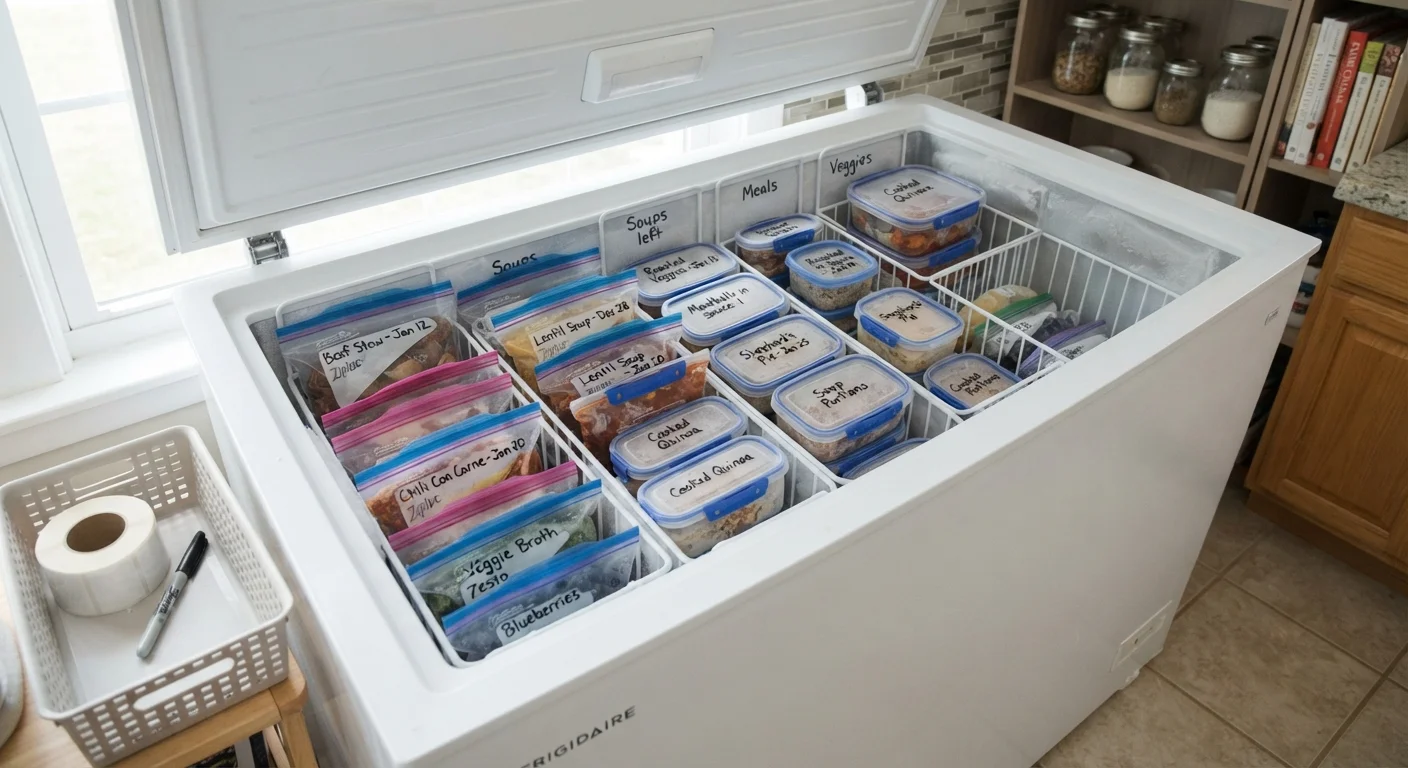
Photo credit: thetastyliving.com
In this article
Discover which foods freeze well, how to package them properly, and how a well-organized freezer can dramatically reduce food waste and grocery spending.
Key Takeaways
- Freezing food at peak freshness preserves quality and cuts spoilage costs.
- Proper packaging, not just freezing, is what prevents texture and flavor loss.
- Labeling with dates and contents stops the 'mystery bag' problem that wastes food.
- A rotating inventory system means your freezer works like a well-run pantry.
- Batch cooking and freezing portions reduces weeknight reliance on takeout.
Why your freezer is an underused financial tool
The average American household throws away a substantial amount of food each year, and much of that waste happens in the refrigerator, where produce and leftovers slowly expire before anyone uses them. Your freezer stops that clock. It holds food at a temperature where microbial growth is effectively halted, meaning a chicken breast or a batch of soup can wait weeks for the right dinner without losing safety or significant quality.
Treating the freezer as active storage rather than a dumping ground changes how a family shops. When meat goes on a good price, buying a larger quantity and freezing portions immediately locks in that value. When a bunch of bananas ripens too fast, freezing them means future pancakes instead of wasted produce. Paired with intentional meal planning, as outlined in this family meal planner guide, smart freezing can measurably reduce weekly grocery spending.
What freezes well and what does not
Understanding which foods respond well to freezing prevents disappointment and wasted effort.
Freezes well: raw and cooked meats, poultry, and fish; bread and most baked goods; cooked beans and grains; soups, stews, and sauces; most cooked pasta dishes; and most vegetables after blanching (briefly boiling then cooling in ice water to stop enzyme activity).
Freezes poorly: raw potatoes and cooked potatoes with a high water content (they turn grainy); lettuce and other delicate greens; cucumbers and radishes; cooked egg whites (they become rubbery); dairy-heavy sauces like cream-based gravies (they separate on thawing); and whole tomatoes (they collapse, though they are fine pureed or cooked from frozen).
Frozen vegetables deserve particular mention. Because commercial freezing happens within hours of harvest, the nutrient content is often comparable to fresh. See the real nutritional value of frozen vegetables for a detailed breakdown.
Blanching
Briefly boiling vegetables for one to three minutes, then immediately cooling them in ice water. This stops the enzymes that cause vegetables to lose color, texture, and flavor in the freezer.
Freezer burn
Dry, discolored patches that form when air reaches frozen food's surface. It is not a safety hazard, but it degrades taste and texture.
First-in, first-out (FIFO)
A rotation method where older items are used before newer ones. Keeping older items at the front prevents food from being forgotten and expiring in quality.
Headspace
The empty space left between food and the lid of a container before freezing. Liquids expand as they freeze, so without headspace a container can crack or a bag can burst.
Batch cooking
Preparing a large quantity of one recipe in a single cooking session, then portioning and freezing the surplus for future meals.
Packaging basics that prevent freezer burn
Freezer burn is caused by air reaching the food's surface. The solution is removing as much air as possible before sealing.
- Use containers or bags labeled as freezer-safe. Regular storage bags are thinner and allow more air transfer.
- Press air out of freezer bags before sealing, or use a straw to draw out residual air.
- For liquids and soups, leave about an inch of headspace in rigid containers because liquid expands when frozen.
- Wrap meat tightly in plastic wrap first, then place it inside a freezer bag for double protection.
- Label every item with the contents and the date frozen. A piece of masking tape and a permanent marker costs almost nothing and prevents the mystery-bag problem.
Flat, uniform packages freeze faster and stack more efficiently, which also helps maintain a consistent internal freezer temperature.
Freeze in meal-sized portions
Freeze proteins and cooked dishes in amounts your family actually eats in one sitting. Thawing a large block just to use half of it means the rest often gets wasted. Portioning before freezing also speeds up thawing time significantly.
How to organize your freezer so nothing gets lost
An organized freezer prevents the situation where food gets buried and forgotten until it is no longer worth eating. The same principles that apply to pantry and refrigerator organization, covered in these kitchen organization habits, transfer directly to the freezer.
Use a simple zone system: designate one area for proteins, one for vegetables and fruits, and one for ready-to-heat meals. In a chest freezer, use labeled bins or mesh bags to create those zones physically. In an upright freezer, assign shelves by category.
Apply a first-in, first-out rule: newer items go behind or beneath older ones. When you add something to the freezer, pull existing items forward. A quick weekly glance at what is oldest helps you plan meals that actually use what you have, rather than always reaching for what is newest. For a structured approach to that process, pantry-first planning offers a useful method.
Building a freezer routine into your weekly habits
Sporadic freezing produces a chaotic freezer. A simple weekly habit produces a functional one. Set aside fifteen minutes once a week, ideally on a grocery day or a meal prep day, to do three things: check what is oldest and plan to use it that week, freeze any proteins or produce that will not be used within two days, and add one batch item such as a double portion of dinner, a batch of cooked rice, or a tray of muffins.
Batch cooking is where the real savings compound. Cooking a large pot of chili or a tray of meatballs takes only marginally more time than a single meal, but the freezer portions it creates reduce weeknight reliance on takeout over the following weeks. A weekly meal plan built around batch cooking makes that habit easier to sustain.
For game-day gatherings or similar occasions, a freezer stocked with homemade portions can also outperform convenience alternatives on cost. A cost comparison of frozen versus homemade appetizers breaks that math down concretely.
Frequently Asked Questions

Author
Kitchen Tips & Tricks Editorial Team
Kitchen Tips & Tricks Editorial Team is the collective byline for our editorial team and contributor network. Articles published under this byline or an editorial pen name are researched, written, and reviewed according to our editorial standards for clarity, consistency, and independence before publication.
View all articles →