
The Family Meal Planner's Guide to Cutting Weekly Food Costs
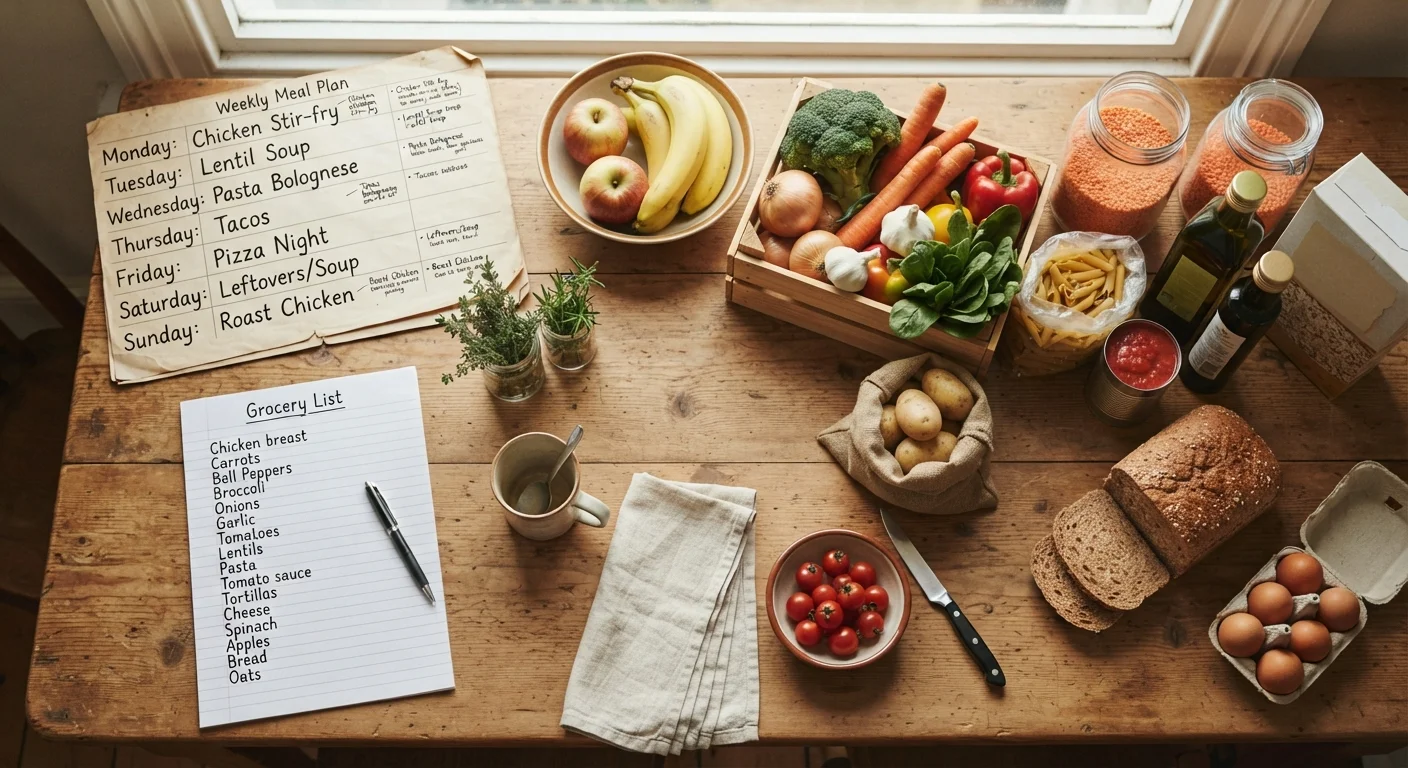
Photo credit: thetastyliving.com
In this article
A practical, start-to-finish introduction to meal planning that helps American families reduce waste and spend less at the grocery store.
Key Takeaways
- Planning meals before you shop is the single most reliable way to reduce impulse spending.
- Auditing your pantry and freezer before writing a grocery list cuts redundant purchases.
- Flexible, ingredient-forward dinners let one protein or vegetable stretch across multiple meals.
- Prep work done ahead of time reduces weeknight waste and lowers the temptation to order out.
- Common planning mistakes, like over-ambitious menus, can keep grocery bills high even with a list.
Why meal planning cuts costs
Unplanned grocery shopping almost always costs more. Without a clear list tied to specific meals, carts fill with items that overlap, duplicate what is already at home, or simply never get used before they spoil. The connection between food waste and grocery spending is direct: what gets thrown away is money already spent.
A written weekly meal plan changes the shopping trip from guesswork into a targeted purchase. You buy what you need for meals you have already decided on. That single shift removes most of the spending that has nothing to do with hunger and everything to do with habit.
Meal planning also reduces last-minute takeout, which is where food budgets often quietly collapse. When dinner is already thought out and ingredients are on hand, the decision to order is much less likely. That does not mean every night runs perfectly, but the plan creates a default that is almost always cheaper than the alternative.
Pantry-first planning
A method of meal planning where you check your existing pantry, fridge, and freezer before writing a grocery list, so you build meals around what you already have.
Ingredient-forward meals
Dinners designed around a small set of shared ingredients rather than individual recipes, so one purchase stretches across multiple nights.
Batch cooking
Cooking larger quantities of a food at one time, then storing portions for use over several meals during the week or freezing for later.
Food waste
Food that is bought but not eaten, either because it spoils before use or is discarded after cooking. Reducing food waste directly lowers the effective cost of groceries.
Mise en place
A French kitchen term meaning 'everything in its place.' In home cooking, it refers to washing, chopping, and organizing ingredients before you begin cooking a meal.
Start with what you already have
Before writing any grocery list, check the freezer, pantry, and fridge. Most households already have proteins, canned goods, grains, or condiments that can anchor one or two meals for the week. Buying duplicates of these items is one of the most common budget leaks in family grocery shopping.
This approach, sometimes called pantry-first planning, is covered in detail in our guide on building meals around what you already have. The short version: write down what you have before you write down what you need. A half-used bag of lentils, a can of diced tomatoes, and frozen chicken thighs can become a complete meal without a single additional purchase.
A well-organized kitchen also makes this habit easier. When you can see what you have, you use it. Our guide on kitchen organization habits that reduce food waste walks through practical storage approaches that help families actually use what they buy.
Building a plan around budget-friendly dinners
The most cost-effective meal plans are built around ingredients, not recipes. Pick two or three proteins for the week, then design meals that share those proteins across multiple nights. A whole roast chicken on Monday becomes chicken tacos on Tuesday and a quick chicken soup by Wednesday. You buy once and eat three times from the same purchase.
Grains and legumes are the other load-bearing elements. Brown rice, dried beans, lentils, and pasta are cheap per serving, filling, and flexible enough to work in many different dishes. Pairing them with smaller amounts of protein and whatever vegetables are well priced that week is a reliable format for affordable dinners.
Produce choice also affects cost. Buying produce that is in season generally means lower prices and better quality. You do not need to overhaul your entire shopping approach, just check which vegetables are priced well during your weekly shop and build one or two meals around those.
For families new to this process, a simple weekly meal planning framework can remove a lot of the decision fatigue that makes planning feel like work.
Prep habits that protect your budget
Ingredients that are washed, cut, or partially cooked when you get home from the store are far more likely to actually get used. The professional kitchen habit of prepping before cooking applies just as well to home cooks working on a tight schedule. Fifteen minutes of prep on Sunday can make the difference between a home-cooked dinner and a last-minute decision that costs more.
The freezer is another prep tool that directly protects the grocery budget. Proteins bought in larger quantities can be portioned and frozen immediately. Cooked grains, soups, and some baked goods freeze well too. Our guide on using your freezer as a savings account covers which foods freeze well and how to package them so they stay usable.
Prep proteins as soon as you get home
When you unpack groceries, portion and freeze any proteins you will not use within two days. This takes about five minutes and prevents the most common cause of wasted grocery spending: meat that goes bad before you get to it. Label each portion with the date so nothing sits forgotten at the back of the freezer.
Avoiding the mistakes that keep costs high
Meal planning can still produce high grocery bills when the plan itself has common structural problems. Over-ambitious menus with many different proteins or specialty ingredients are a frequent cause. Each unique ingredient you add to the week requires its own purchase, and if a recipe only uses part of it, the rest often spoils.
Another issue is planning for perfect weeks rather than realistic ones. If the plan assumes home-cooked dinners every single night but two nights routinely fall apart, the ingredients bought for those meals frequently go to waste. Building one or two flexible fallback meals into the plan, using pantry staples that do not spoil, accounts for that reality without blowing the budget.
Sticking with an overly rigid grocery list can also create problems. Prices change week to week, and a different cut or a different vegetable sometimes makes more sense on a given shopping trip. The reasons grocery bills stay high despite planning often come down to these small, fixable habits rather than the plan itself being wrong.
For a complete walk-through of the weekly planning process, this end-to-end family meal plan guide covers every step from choosing recipes to writing a shopping list.
Frequently Asked Questions

Author
Dinner & Dessert Editorial Team
Dinner & Dessert Editorial Team is the collective byline for our editorial team and contributor network. Articles published under this byline or an editorial pen name are researched, written, and reviewed according to our editorial standards for clarity, consistency, and independence before publication.
View all articles →