
Food Waste and the Family Meal Plan: What the Numbers Tell Us
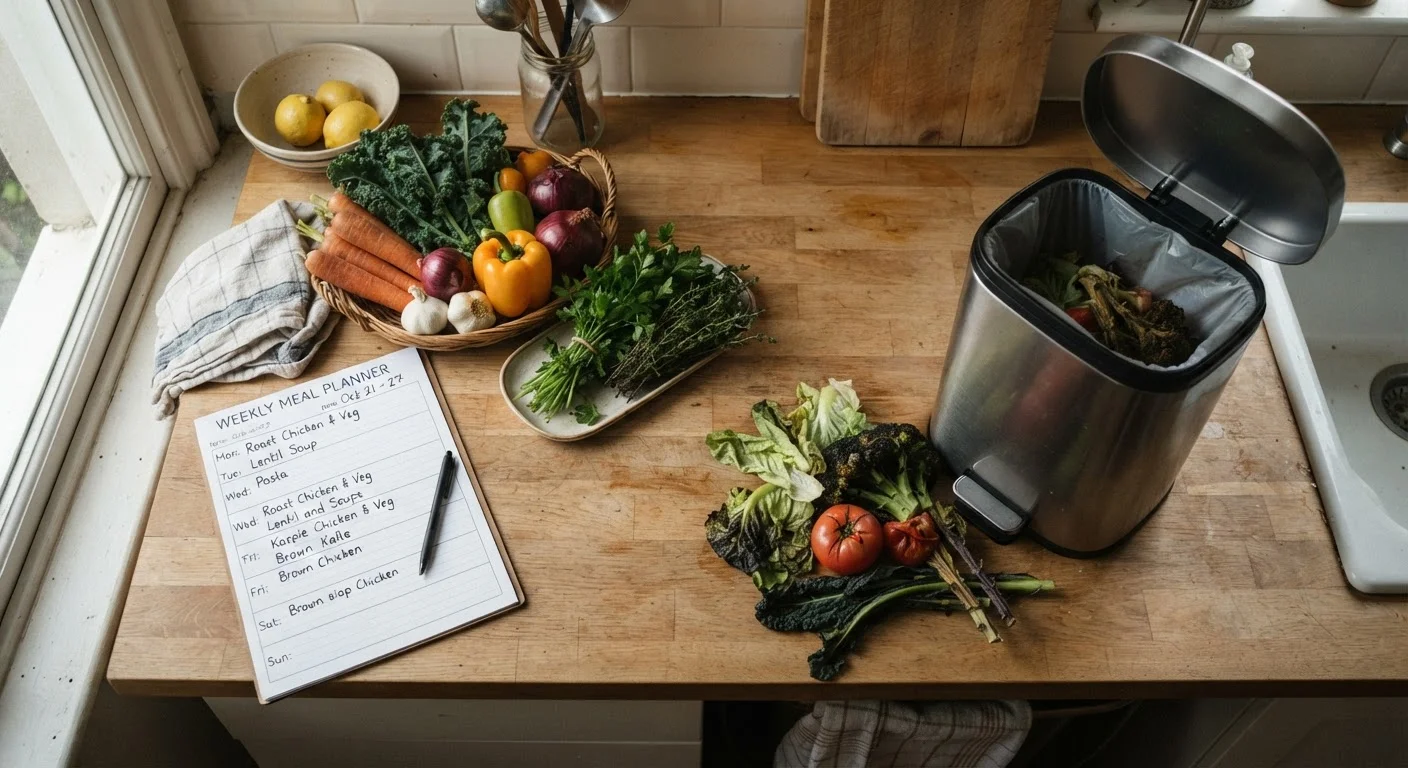
Photo credit: thetastyliving.com
In this article
Households throw away a surprising share of their food budget. Explore key facts about food waste and how meal planning helps close that gap.
How much food are American households actually wasting?
Food waste in American homes is larger than most families expect. The U.S. Department of Agriculture has estimated that between 30 and 40 percent of the food supply in the United States goes uneaten. A substantial share of that loss happens at the household level, not in restaurants or grocery stores.
30-40%
Share of U.S. food supply that goes uneaten
According to USDA estimates covering the full food supply chain, from farm to household.
$1,500+
Estimated annual food waste cost per household
The Natural Resources Defense Council has cited figures in this range for the average American family of four.
52%
Share of food waste originating at the consumer level
USDA Economic Research Service analyses have attributed roughly half of total food loss to household and food service consumption.
For a family spending $1,000 per month on groceries, that scale of waste can translate to hundreds of dollars thrown away each year in uneaten meals, forgotten produce, and spoiled leftovers. These numbers reflect averages and will vary by household, but the direction is consistent: most families waste more than they realize.
The categories most likely to be discarded are fresh fruits and vegetables, dairy products, and prepared meals that go uneaten. Protein foods such as meat and poultry are discarded less often by volume, but they carry a higher dollar cost per pound when they are lost.
See the pantry-first planning guide for a practical audit method that can help your family identify where losses are happening before writing your next grocery list.
Why meal planning reduces waste
Meal planning addresses the two most common causes of household food waste: buying more than a family can use before items spoil, and preparing food without a clear plan for leftovers.
When a family maps out meals for the week before shopping, the grocery list becomes more precise. Produce purchased with a specific recipe in mind gets used on a predictable schedule. Proteins bought in bulk can be portioned and frozen immediately rather than sitting in the refrigerator past their safe window.
A structured weekly framework also gives families a system for rotating leftover ingredients. A roasted chicken on Monday can become a soup base by Wednesday. Half a bunch of cilantro bought for tacos can anchor a grain bowl two days later. These connections do not happen accidentally; they happen when a written plan exists before the shopping trip.
How food is stored and arranged matters as much as what gets planned. A meal plan paired with intentional storage habits, such as keeping older items at the front of the refrigerator and labeling leftovers with dates, produces better results than planning alone.
For families who want a complete walkthrough, the weekly meal plan guide covers every step from recipe selection to the finished shopping list.
Key terms and concepts
Understanding the vocabulary around food waste helps families interpret news coverage, nutrition guidance, and planning advice more accurately.
Consumer food waste
Food discarded by households after purchase, including spoiled produce, uneaten leftovers, and items past their use-by date. This is distinct from losses that occur during production, transportation, or retail.
Food loss
The broader category that includes all food that does not reach a consumer, covering agricultural, processing, and distribution stages. Household waste is a subset of total food loss.
Use-by date
A safety-based date printed on perishable foods indicating when the manufacturer considers the product no longer safe to eat. It differs from a best-by date, which signals quality rather than safety.
Best-by date
A quality indicator, not a safety marker. Food past its best-by date may have changed in taste or texture but is not necessarily unsafe. Confusion between use-by and best-by dates leads many households to discard food prematurely.
Meal planning
The practice of deciding in advance which meals a household will prepare over a set period, typically a week, and building a grocery list to match those decisions precisely.
Pantry rotation
Organizing shelf-stable and refrigerated food so that older items are used before newer ones. Also called FIFO (first in, first out), this habit reduces spoilage without requiring any additional spending.
These distinctions matter when building a plan. A family trying to cut food costs in the dinner and dessert category will make different decisions if they understand the difference between food that was spoiled versus food that was simply never prepared.
The family meal planner's cost-cutting guide applies several of these concepts directly to weekly grocery decisions.

Author
Meal Planning Basics Editorial Team
Meal Planning Basics Editorial Team is the collective byline for our editorial team and contributor network. Articles published under this byline or an editorial pen name are researched, written, and reviewed according to our editorial standards for clarity, consistency, and independence before publication.
View all articles →